

Analys
SHB Råvarubrevet 18 oktober 2013

 Råvaror allmänt
Kinas BNP bekräftar vändning
En hörnpelare i vår tro på stigande råvarumarknad denna höst är att Kinas makro ska stå för höstens positiva överraskning och nattens BNP-siffra är ett tecken på detta, BNP-trenden i Q3 följde det sk Keqiang index uppåt, Keqiang är normaliserat mått på utlåning, järnvägstransporter och elproduktion – en bra indikator på tung industri i Kina. Kinaledningens stormöte i november är nästa större milstolpe i kommunikationen av vad som planeras kommande år. Vi tror att utvecklingen i Kina under H2 och prognoser för 2014 håller uppe kinaberoende råvaror.
Data har annars varit blandad i de stora ekonomierna på sistone. Överlag tror vi att de stora ekonomierna kommer fortsätta stärkas under de kommande månaderna då de erfar positiva efterdyningar från börsuppgångar runt om i världen. Med den akuta skuldtakskrisen i USA bakom oss så tror vi nu att marknaden kan fokusera på andra mer positiva ting. Sedan 2010 har hösten varit en stark säsong för finansiella tillgångar beroende på att det varit tiden då Fed lanserat QE stöd. Årets uteblivna nedskalning av QE är att betrakta som ett stöd och vi ser inget tecken på att höstens styrka ska brytas i år.
Basmetaller
Kina stärker metallerna
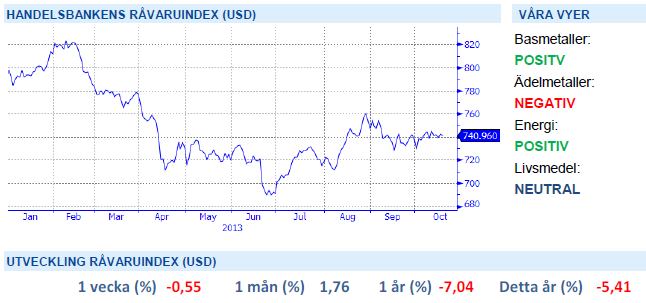
Basmetallerna har under veckan till stor del handlats på nyheter kring budgetkrisen i USA. Sedan faran (åtminstone för stunden) har blåst över kryper basmetallerna uppåt. Kinas bättre än väntad BNP-tillväxt för tredje kvartalet stärker metallerna under fredagen, 7,8 % mot väntade 7,5 %, (detta att jämföra mot andra kvartalets 7,5 %). Vi fortsätter att tro att en positiv makromiljö ska stärka basmetaller under hösten. Främst drivet av ett starkare Kina, världens största konsument av metaller.
Aluminium går dock mot trenden och backar 1,5% under veckan på plötsligt stigande lager. LME´s lager för metallen har under veckan stigit med nästan 2 %. Bly är den som sticker ut med en uppgång på över 3 %, medan övriga ligger runt 0,5 %.
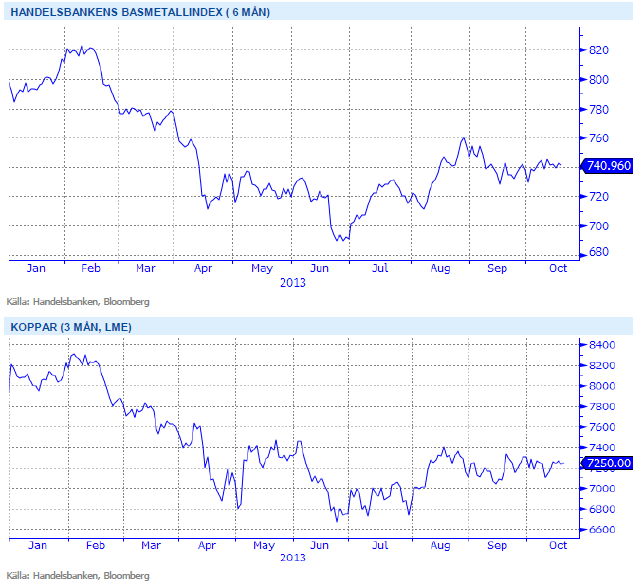
Vi tror att Kinas tillväxt kommer överraska positivt under Q4 och Q1, vilket kommer stärka metallerna. Vi tror på: LONG BASMETALLER
Ädelmetaller
Korta positioner driver upp guldet
Torsdagen bjöd på ett kraftigt uppställ av guldet, drivet av att folk köpte tillbaks korta positioner. Rörelsen ser ut tappa kraft här kring 1320 dollar per uns, och vår mer negativa syn på ädelmetaller kvarstår. Under veckan som gått har hela ädelmetallsektorn stigit ganska mycket, och platina visar upp den starkaste uppgången på hela fem procent.
Vi är sedan förra veckan tillbaks i vår mer långsiktiga negativa vy på guldet, framför allt för att de faktorer som borde kunna driva upp priset kortsiktigt nu ebbat ut. När världen nu ser ut att gå in i en period av bättre tillväxt, och med ”flaskhalsar” i tillväxtekonomierna tror vi att det är rätt att favorisera konjunkturdrivna råvaror, och guldets närmast kontracykliska egenskaper kommer då att hämma prisutvecklingen.
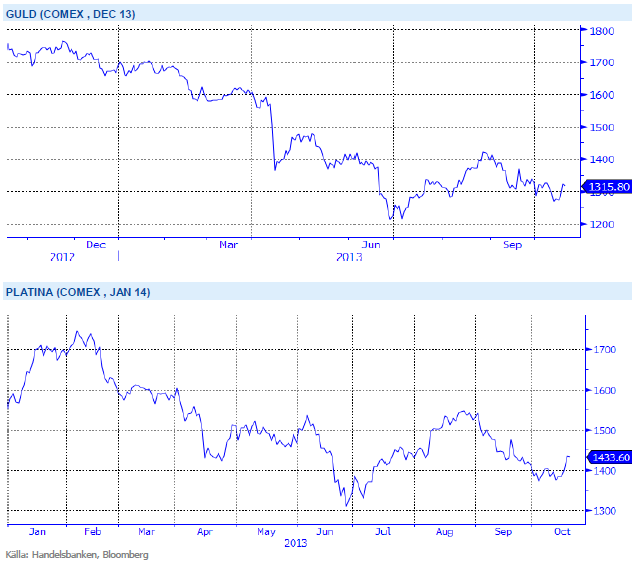
Efter en uppgång under sommaren tror vi åter att guldets väg lutar utför. Vi tror på: SHRT GULD H
Energi
Fokus på USA
Oljemarknaden har varit väldigt stilla under veckan där det mesta av fokus riktats mot amerikanska budgetförhandlingar och diskussionerna mellan Iran, USA, Ryssland, Kina, Frankrike, UK och Tyskland där Iran antyder att man är redo att dra ned sin kärntekniska verksamhet för att lätta på de ekonomiska sanktionerna (nästa möte den 7-8 nov i Genève). Amerikansk sysselsättningsstatistik kom in något sämre än väntat och priset backar med 0.7 procent över veckan. Marknaden har fastnat i något av en range som blir snävare och snävare där vi bör se ett trendbrott snart.
Elpriset (Q114) har fallit med ca 2.5 procent under veckan efter att det lågtrycksdominerade vädret ligger kvar. Det blir mycket varmare, mer tillrinning och kärnkraften som föll ut oväntat förra veckan är på väg in igen. Även kol och utsläppsrätterna pressade något ytterligare under veckan. Energibalansen ser ut att förbättras med ca 1TWh från föregående vecka men visar fortsatt på ett underskott om 19 TWh mot normalen. Vi har varit positiva till elpriset sedan i augusti och ser detta som en fullt naturlig korrigering när energiutfallet dessutom ser ut att bli något bättre än väntat, förutsättningarna för ett stigande elpris mot vintern kvarstår dock med underskottet i balansen, marginalkostnadsstödet för kol (svårt att motivera amerikansk export om man ser till transportkostnader på uppemot 20 dollar från gruva till hamn och ytterligare en 10-11 dollar frakt till Europa…) och osäkerheten i kärnkraften.
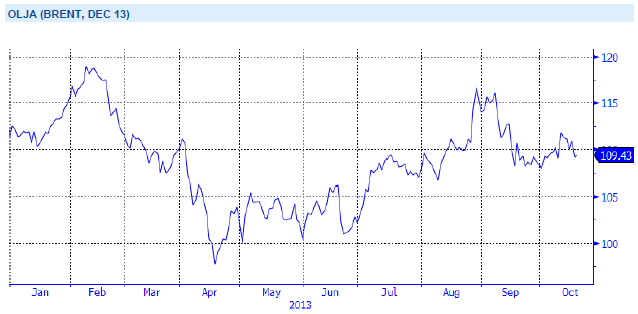
Energiunderskott tillsammans med osäkerhet kring kärnkraftsverken inför vintern talar för högre elpris. Vi tror på: LONG EL
Livsmedel
Fortsatt blött i delar av Ryssland
Terminspriserna på vete handlas på ungefär samma nivå som för en vecka sedan i både Chicago och Paris. USA:s höstveteregioner faller en del regn, vilket gynnar redan sådd gröda. I Australien fortgår skörden med gott resultat. Argentina är fortfarande torrt och helt klart har vetet tagit skada. Det regnar dock fortfarande i stora delar av Ukraina varför en del ifrågasätter detta, det finns också stora frågetecken angående möjligheten för den sent sådda grödan att utvecklas tillräckligt väl inför vintern. Samma situation, om inte värre, råder i Ryssland där de enligt en del uppgifter haft den mest nederbördsrika septembermånaden sedan år 1885! Även där regnar det fortfarande i en del områden och kanske än mer i Ryssland ifrågasätts chanserna för den sent sådda grödan att utvecklas väl – sen sådd och blöta fält är inte idealiskt. Det finns gott om vete (och annan spannmål) att tillgå i världen, inte minst med en förväntad stor skörd i Australien på ingång – varför en eventuell fortsatt uppgång bör begränsas på kort sikt. Problemen i öst bör dock tas på allvar och följas noggrant då det kan få stora följder för nästa års produktionsnivå.
Kraftig nederbörd i Brasilien, världens topproducent av socker, försenar exporten för säsongen. Det blöta vädret har sen i mitten av juli gett stöd till sockerpriset som noteras upp 25 procent från nivåer kring produktionskostnad och står i nuläget på ett årshögsta. En starkare brasiliansk real mot dollarn är en annan orsak bakom den kraftiga uppgången. Det starka sockerpriset har således drivit med sig etanolen som har vänt upp från treårshögsta.
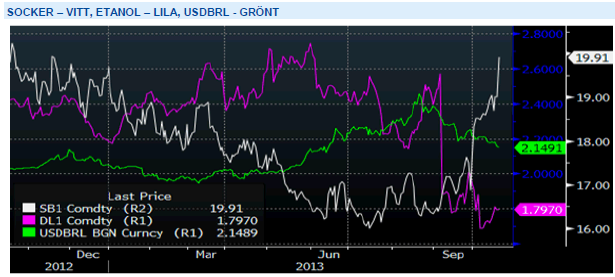
Försening av skörden efter längre perioder av nederbörd i Brasilien samt en stark brasiliansk real driver upp sockerpriset. Vi tror på: BULL SOCKER
Handelsbankens Råvaruindex
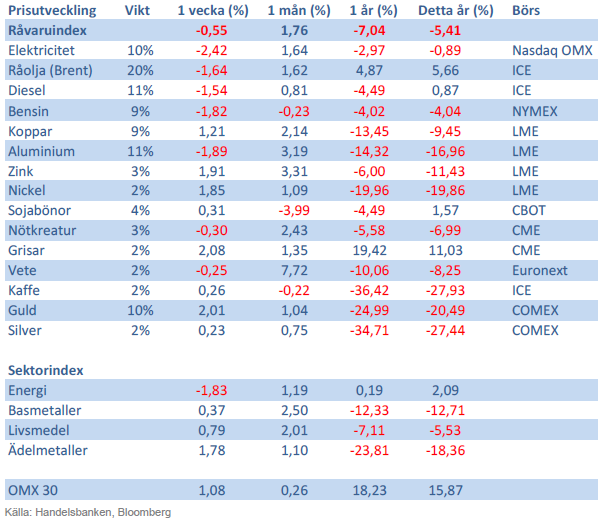
Handelsbankens råvaruindex består av de underliggande indexen för respektive råvara. Vikterna är bestämda till hälften från värdet av nordisk produktion (globala produktionen för sektorindex) och till hälften från likviditeten i terminskontrakten.
[box]SHB Råvarubrevet är producerat av Handelsbanken och publiceras i samarbete och med tillstånd på Råvarumarknaden.se[/box]
Ansvarsbegränsning
Detta material är producerat av Svenska Handelsbanken AB (publ) i fortsättningen kallad Handelsbanken. De som arbetar med innehållet är inte analytiker och materialet är inte oberoende investeringsanalys. Innehållet är uteslutande avsett för kunder i Sverige. Syftet är att ge en allmän information till Handelsbankens kunder och utgör inte ett personligt investeringsråd eller en personlig rekommendation. Informationen ska inte ensamt utgöra underlag för investeringsbeslut. Kunder bör inhämta råd från sina rådgivare och basera sina investeringsbeslut utifrån egen erfarenhet.
Informationen i materialet kan ändras och också avvika från de åsikter som uttrycks i oberoende investeringsanalyser från Handelsbanken. Informationen grundar sig på allmänt tillgänglig information och är hämtad från källor som bedöms som tillförlitliga, men riktigheten kan inte garanteras och informationen kan vara ofullständig eller nedkortad. Ingen del av förslaget får reproduceras eller distribueras till någon annan person utan att Handelsbanken dessförinnan lämnat sitt skriftliga medgivande. Handelsbanken ansvarar inte för att materialet används på ett sätt som strider mot förbudet mot vidarebefordran eller offentliggörs i strid med bankens regler.

Brent is climbing higher. Front-month is at USD 106.3/bl this morning, close to a weekly high and a USD 9/bl jump from Mondays open. This is the move we flagged as a risk earlier in the week: the market shifting from ”a deal is around the corner” to ”this is going to take longer than we thought”.

Analyst Commodities, SEB
During April, rest-of-year Brent remained remarkably stable around USD 90/bl. A stability which rested on one single assumption: the SoH reopens around 1 May. That assumption is now slowly falling apart.
As we highlighted yesterday: every week of delay beyond 1 May adds (theoretically) ish USD 5/bl to the rest-of-year average, as global inventories draw 100 million barrels per week. i.e., a mid-May reopening implies rest-of-year Brent closer to USD 100/bl, and anything pushing into June or July takes us meaningfully higher.
What’s changed in the last 48 hours:
#1: The US military has formally warned that clearing suspected sea mines from SoH could take up to six months. That is a completely different timescale from what the financial market is pricing. Even a political deal tomorrow does not immediately reopen the strait.
#2: Trump has shifted his tone from urgency to ”strategic patience”. In yesterday’s press conference: ”Don’t rush me… I want a great deal.” The market is reading this as a president no longer feeling pressured by timelines, with the naval blockade running in the background.
#3: So far, the military activity is escalating, not de-escalating. Axios reports Iran is laying more mines in SoH. The US 3rd carrier strike group (USS George H.W. Bush) is arriving with two countermine vessels. Trump yesterday ordered the US Navy to destroy any Iranian boats caught laying mines. While CNN reports that the Pentagon is actively drawing up plans to strike Iranian SoH capabilities and individual Iranian military leaders if the ceasefire collapses. i.e., NOT a attitude consistent with an imminent deal!
Spot crude and product prices eased off the early-April highs on a combination of system rerouting and deal optimism. Both now weakening. Goldman estimates April Gulf output is reduced by 14.5 mbl/d, or 57% of pre-war supply, a number that keeps getting worse the longer this drags on.
Demand-side adaptation is ongoing: S. Korea has cut its Middle East crude dependence from 69% to 56% by pulling more from the Americas and Africa, and Japan is kicking off a second round of SPR releases from 1 May. But SPRs are finite.
Ref. to the negotiations, we should not bet on speed. The current Iranian leadership is dominated by genuine hardliners willing to absorb economic pain and run the clock to extract concessions. That is not a setup for a rapid resolution. US/Israeli media briefings keep framing the delay as ”internal Iranian divisions”, the reality is more complicated and points toward weeks and months, not days.
Our point is that the complexity is large, and higher prices have only just started (given a scenario where the negotiations drag out in time). The market spent April leaning on the USD 90/bl rest-of-year assumption; that case is diminishing by the hour. If ”early May reopening” is replaced by ”June, July or later” over the next week or two, both crude and products have meaningful room to reprice higher from here. There is a high risk being short energy and betting on any immediate political resolution(!).
Down on Friday. Up on Monday. The Brent June crude oil contract traded down 5.1% last week to a close of $90.38/b. It reached a high of $103.87/b last Monday and a low of $86.09/b on Friday as Iran announced that the Strait of Hormuz was fully open for transit. That quickly changed over the weekend as the US upheld its blockade of Iranian oil exports while Iran naturally responded by closing the SoH again. The US blew a hole in the engine room of the Iranian ship TOUSKA and took custody of the ship on Sunday. Brent crude is up 5.6% this morning to $95.4/b.

The cease-fire is expiring tomorrow. The US has said it will send a delegation for a second round of negotiations in Islamabad in Pakistan. But Iran has for now rejected a second round of talks as it views US demands as unrealistic and excessive while the US is also blocking the Strait of Hormuz.
While Brent is up 5% this morning, the financial market is still very optimistic that progress will be made. That talks will continue and that the SoH will fully open by the start of May which is consistent with a rest-of-year average Brent crude oil price of around $90/b with the market now trading that balance at around $88/b.
Financial optimism vs. physical deterioration. We have a divergence where the financial market is trading negotiations, improvements and resolution while at the same time the physical market is deteriorating day by day. Physical oil flows remain constrained by disrupted flows, longer voyage times and elevated freight and insurance costs.
Financial markets are betting that a US/Iranian resolution will save us in time from violent shortages down the road. But every day that the SoH remains closed is bringing us closer to a potentially very painful point of shortages and much higher prices.
The US blockade is also a weapon of leverage against its European and Asian allies. When Iran closed the SoH it held the world economy as a hostage against the US. The US blockade of the SoH is of course blocking Iranian oil exports. But it is also an action of disruption directed towards Europe and Asia. The US has called for the rest of the world to engaged in the war with Iran: ”If you want oil from the Persian Gulf, then go and get it”. A risk is that the US plays brinkmanship with the global oil market directed towards its European and Asian allies and maybe even towards China to force them to engage and take part. Maybe unthinkable. But unthinkable has become the norm with Trump in the White House.
Wild moves yesterday. Brent crude traded to a high of $114.43/b and a low of $96.0/b and closed at $99.94/b yesterday.
US – Iran negotiations ongoing or not? What a day. Donald Trump announced that good talks were ongoing between Iran and the US and that the 48 hour deadline before bombing Iranian power plants and energy infrastructure was postponed by five days subject to success of ongoing meetings. Iranian media meanwhile stated that no meetings were ongoing at all.
Today we are scratching our heads trying to figure out what yesterday was all about.
Friends and family playing the market? Was it just Trump and his friends and family who were playing with oil and equity markets with $580m and $1.46bn in bets being placed by someone in oil and equity markets just 15 minutes before Trump’s announcement?
Was Trump pulling a TACO as he reached his political and economic pain point: Brent at $112/b, US Gas at $4/gal, SPX below 200dma and US 10yr above 4.4%?
Different Iranian factions with Trump talking with one of them? Are there real negotiations going on but with the US talking to one faction in Iran while another, the hardliners, are not involved and are denying any such negotiations going on?
Extending the ultimatum to attack and invade Kharg island next weekend? Or, is the five day delay of the deadline a tactical decision to allow US amphibious assault ships and marines to arrive in the Gulf in the upcoming weekend while US and Israeli continues to degrade Iranian military targets till then. And then next weekend a move by the US/Israel to attack and conquer for example the Kharg island?
We do not really know which it is or maybe a combination of these.
We did get some kind of TACO ydy. But markets have been waiting for some kind of TACO to happen and yesterday we got some kind of TACO. And Brent crude is now trading at $101.5/b as a result rather than at $112-114/b as it did no the high yesterday.
But what really matters in our view is the political situation on the ground in Iran. Will hardliners continue to hold power or will a more pragmatic faction gain power?
If the hardliners remain in power then oil pain should extend all the way to US midterm elections. The hardliners were apparently still in charge as of last week. Iran immediately retaliated and damaged LNG infrastructure in Qatar after Israel hit Iranian South Pars. The SoH was still closed and all messages coming out of Iran indicated defiance. Hardliners continues in power has a huge consequence for oil prices going forward. The regime has played its ’oil-weapon’ (closing or chocking the Strait of Hormuz). It is using it to achieve political goals. Deterrence: it needs to be so politically and economically expensive to attack Iran that it won’t happen again in the future. Or at least that the US/Israel thinks 10-times over before they attack again. The highest Brent crude oil closing price since the start of the war is $112.19/b last Friday. In comparison the 20-year inflation adjusted Brent price is $103/b. So Brent crude last Friday at $112.19/b isn’t a shockingly high price. And it is still far below the nominal high of $148/b from 2008 which is $220/b if inflation adjusted. So once in a lifetime Iran activates its most powerful weapon. The oil weapon. It needs to show the power of this weapon and it needs to reap political gains. Getting Brent to $112/b and intraday high of $119.5/b (9 March) isn’t a display of the power of that weapon. And it is not a deterrence against future attacks.
So if the hardliners remain in power in Iran, then the SoH will likely remain chocked all the way to US midterm elections and Brent crude will at a minimum go above the historical nominal high of $148/b from 2008.
Thus the outlook for the oil price for the rest of the year doesn’t depend all that much of whether Trump pulls a TACO or not. Stops bombing or not. It depends more on who is in charge in Iran. If it is the hardliners, then deterrence against future attacks via chocking of the SoH and high oil prices is the likely line of action. It is impacting the world but the Iranian ’oil-weapon’ is directed towards the US president and the the US midterm elections.
If a pragmatic faction gets to power in Iran, then a very prosperous future is possible. However, if power is shifting towards a more pragmatic faction in Iran then a completely different direction could evolve. Such a faction could possibly be open for cooperation with the US and the GCC and possibly put its issues versus Israel aside. Then the prosperity we have seen evolving in Dubai could be a possible future also for Iran.
So far it looks like the hardliners are fully in charge. As far as we can see, the hardliners are still fully in control in Iran. That points towards continued chocking of the SoH and oil prices ticking higher as global inventories (the oil market buffers) are drawn lower. And not just for a few more weeks, but possibly all the way to the US midterm elections.



Solkraften pressar elpriserna dagtid

Michel Gubel ger sin syn på oljemarknaden

Svag vårflod dubblar elpriserna
Brent crude up USD 9/bl on the week… ”deal around the corner” narrative fades
Market Still Betting on Timely Resolution, But Each Day Raises Shortage Risk

Christian Kopfer om läget för oljan
Market Still Betting on Timely Resolution, But Each Day Raises Shortage Risk
Brent crude up USD 9/bl on the week… ”deal around the corner” narrative fades
Michel Gubel ger sin syn på oljemarknaden
Solkraften pressar elpriserna dagtid
-
 Nyheter4 veckor sedan
Christian Kopfer om läget för oljan
-
Analys3 veckor sedan
Market Still Betting on Timely Resolution, But Each Day Raises Shortage Risk
-
Analys3 veckor sedan
Brent crude up USD 9/bl on the week… ”deal around the corner” narrative fades
-
 Nyheter2 veckor sedan
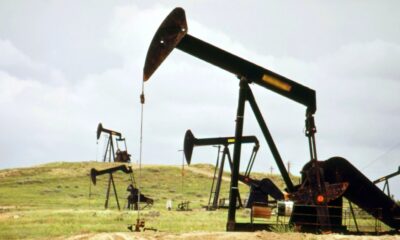
Michel Gubel ger sin syn på oljemarknaden
-
 Nyheter2 veckor sedan
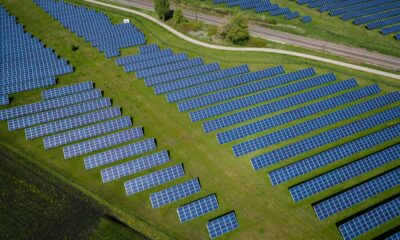
Solkraften pressar elpriserna dagtid
-
Nyheter2 veckor sedan
Svag vårflod dubblar elpriserna