

Nyheter
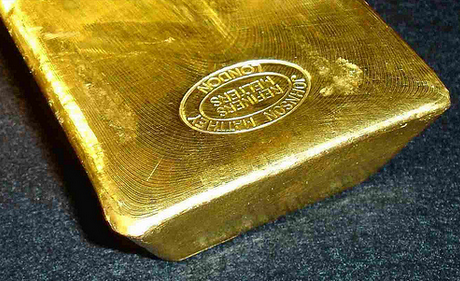
GOLD SHARES vs ’NORMAL’ SHARES, unfamiliarity vs blind confidence

PAPER STILL SEEMS TO BE MORE TRUSTED THAN GOLD

Henk J. Krasenberg
Although there still seems to be a lot of doubts about higher gold prices, the price of gold has nicely recovered from the dips it had been experiencing in the last few months. Last week, it came even close again to the $1,800 level but the upward movement was not yet strong enough to break it to reach the more golden pastures. As you know, I have very little doubt that gold will continue its march to considerably higher gold prices. I have expressed my opinions and views several times in my writings and I also mentioned that I certainly am not the only one that is having those strong feelings and expectations about the future of gold.
Since I told you about the $10,000 gold price as Shayne McGuire was talking and writing about it, several other gold guru’s mentioned that level as distinctly possible in a not too far away future. You may feel they are wishfully dreaming about those high price levels for gold, but I hope to have madeclear to you that such a scenario could very well unfold if some of the currently prevailing economic and financial circumstances further would deteriorate. How many times has Greece been’saved’ and is it saved now? And is Greece the only nation that can hardly service its own debt?
As my so appreciated friend James Turk wrote in his most recent comment –just before last weekend- ”Greece remains in debtor’s prison. That horrible fate was confirmed this past week with the ‘group-sentencing’ handed down by Brussels’ eurocrats, Merkel, Sarkozy, the ECB and IMF, and most shameful of all, the Greek politicians who accepted the brazen ultimatum delivered to them. …………..
If Greek politicians were really acting in the best interests of the Greek people, they would have taken the same path chosen by Iceland’s leaders – default. ………….. There is no hope for Greece to repay its debts my meeting the draconian burden imposed on it. But the banks want their money back, even if it means keeping Greece in debtor’s prison.”
Last month, I wrote that all the so-called rescue measures and agreements would not really solve the problems. In times of crises, politicians usually don’t want to take the risk to be remembered for being the ones that had taken all those harsh decisions. They rather want us to believe that they were the ones that brought all the good news and wise decisions. But in times like we have today, it would be better to have leaders of the world that act to their real beliefs, rather than be concerned about their image and future voters. Yet, after all the ’solutions’ we have seen so far, another one is in the making. And of course, this time it will be the final one……. This past weekend, the leaders of the G20 countries were assembled in another session to come up with a ’once and for all’-solution for the financial crisis that was triggered by the collapse of Lehman Brothers in 2008 and now has spread over the debtridden European countries. The $1 trillion stimulant injection of three years ago was just not enough. So now they are working on another huge injection of money, this time $2 trillion, to draw an end to all headaches.
However, this time the G20 has to come up with real drastic measures, such as massive cuts in spending at the country levels, and other painful sacrifices, including the creation of new money (remember that I talked last month about getting the dust off the money printing presses?). Only then would non-EU countries, including Japan and China, be prepared to support any more rescue operations, as was so politely remarked by British finance minister George Osborne. I found it ironic that U.S. Treasury Secretary Timothy Geithner acknowledged that Europe had made significant progress in designing a ’credible’ solution for the crisis. It made me think that we should not give the same meaning to the word ’progress’ as we do to the word ’prosperity’ and that we are likely to see progress of more of those ’final solutions’ before we will see prosperity again…………..
This serious environment should give gold a solid opportunity to flourish and to continue its path to higher price levels. Whether we will see the earlier-mentioned $10,000 gold level remains to be see. But I don’t think that that is the real important question. The question is whether gold has the potential to go back down to for instance $1,200 or lower or are there more chances that it will go up considerable? Yes, there are enough people that are truly convinced that gold is not an investment vehicle. They include all those smart ones that defend their disbelief by pointing out that gold has only gone up because it was hyped up to the point that gold is now in a bubble. That is an easy one to attack. A bubble in gold is being created when a massive interest from investors is being converted in purchases of the metal. Let’s be realistic, who really owns gold, physical gold as an investment. Look in your family and circles of friends, can you name 10 of them of whom you know they own gold? Most likely not. Because, according to the current estimates, only around 2% of all assets are in physical gold and/or gold mining shares. Only if this percentage would increase tenfold in a relative short period of time, we could possibly speak of a bubble. A lot has to happen before we reach that stage.
Another argument against gold as an investment is that gold is not really the best store of value as it is so branded often. True, but only if you just look at some figures without putting them in their real perspective. The former nominal high of all times was $850 dating from January 1980 was first seen again 28 years later, to be precise in January 2008. The picture looks already much better if you consider that the $850 high was mainly reached in all of the two preceding weeks since it had started 1980 at $550. As nobody mentions that $550 anymore, let’s indeed take the $850 as the former historical milestone. Then we would contently analyze that gold has more than doubled since 1980. True again, but not really. What has really happened to gold if we take into consideration what the loss of buying power, or call it inflation, has done to our money. The interesting chart below shows us how the real value of gold has developed since the $850 of 1980. Quite a different picture. This picture clearly contradicts what so many people think and say, that gold is too expensive at current prices. As I have elaborated on this in earlier reports, gold is not high from an historical point of view.
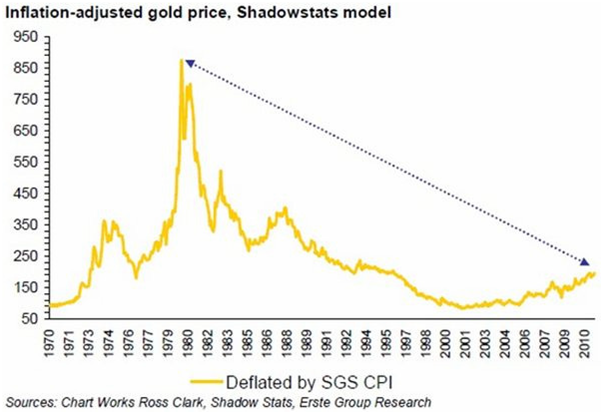
The $850 of January 1980, adjusted for official inflation figures, would equal to a current gold price of between $2,400 and $2,500 per ounce. For the other shiny metal, silver, the $50 high of 1980 would now have to be $150 per ounce to equal the value of then. Based on this alone, we still have a long way to go. Actually, we have a much longer way to go if we follow the reasoning of my colleague Jason Hamlin in one of his recent GoldStockBull issues: ”John Williams, the economist behind the website Shadow Stats (www.shadowstats.com), has done us the favour of stripping out the government gimmicks in order to derive the true inflation rate over the past thirty years. Using his SGS-Alternate Consumer Inflation Measure, gold would need to reach $8,890 per troy ounce and silver would need to reach $517 per troy ounce to match the highs from January of 1980.”
I do realize that it may not be easy for you to see all the high gold prices that I have talked about in my recent issues, as attainable. Also to me, and I am a fervent believer in gold for what seem to be quite realistic reasons to me, it feels sometimes funny to talk about $8,000 to $10,000 gold prices as long as gold isn’t strong enough to break through the $1,800 level. I know I have said it before but I feel urged to say it again. In my opinion, you can not afford to be cynical about the gold price. I am convinced it will surprise us. The potential value of gold is bound to be recognized by a much larger group of investors than the group that represent the 2% of assets that is in gold values today. To me, it is outright amazing that the overall investment public is still willing to prefer the regular stock markets for the majority of their investments. I just cannot understand the trust they have in paper values such as stocks, bonds and cash money, trust that has been affected so often already. It looks just like politics, selling solutions that later turn out not to work. Selling hope.
Admittedly, I also like to believe in hope. And in some kinds of paper too. Just enough cash to move around comfortably and paper backed by gold and silver, such as ETF’s, physical but virtual gold holdings and shares of mining and exploration companies that have proven to have metal reserves in the ground. Just the other day, I stumbled on a nice little video about why gold should not be neglected. You can find it here at Youtube. I gladly repeat the words that I used at the end my of my last issue. I believe they are so true.. a few years from now, gold (and silver) will have made the difference……..!
Henk J. Krasenberg
European Gold Centre
[hr]
European Gold Centre
European Gold Centre analyzes and comments on gold, other metals & minerals and international mining and exploration companies in perspective to the rapidly changing world of economics, finance and investments. Through its publications, The Centre informs international investors, both institutional and private, primarily in Europe but also worldwide, who have an interest in natural resources and investing in resource companies.
The Centre also provides assistance to international mining and exploration companies in building and expanding their European investor following and shareholdership.
Henk J. Krasenberg
After my professional career in security analysis, investment advisory, porfolio management and investment banking, I made the decision to concentrate on and specialize in the world of metals, minerals and mining finance. From 1983 to 1992, I have been writing and consulting about gold, other metals and minerals and resource companies.
The depressed metal markets of the early 1990’s led me to a temporary shift. I pursued one of my other hobbies and started an art gallery in contemporary abstracts, awaiting a new cycle in metals and mining. That started to come in the early 2000’s and I returned to metals and mining in 2002 with the European Gold Centre.
With my GOLDVIEW reports, I have built an extensive institutional investor following in Europe and more of a private investor following in the rest of the world. In 2007, I introduced my MINING IN AFRICA publication, to be followed by MINING IN EUROPE in 2010 and MINING IN MEXICO in 2012.
For more information: www.europeangoldcentre.com



Det råder speciella förutsättningar på elmarknaden just nu och allt styrs till största delen av vädret. Sol och bitvis god vindkraftsproduktion under maj, i kombination med svag hydrologi och begränsad kärnkraft har lett till stora svängningar i elpriset. Juni inleds liknande och idag tangerar elpriserna nivåer från krisåret 2022. Dock förväntas elpriserna gå ner då kärnkraften ökar.
Juni börjar med höga elpriser och orsakerna är brist på vindkraft, torra väderprognoser och mindre kärnkraft. Prisuppgången i maj var särskilt tydlig i norra Sverige, elområde 1 och 2, och ligger just nu nära en krona per kWh. I elområdena 3 och 4, södra Sverige, blev månadsmedelspotpriset för maj 35–40 procent högre jämfört med april men har rusat idag till nivåer på mellan 130–160 öre/kWh.
– Dagens höga priser visar tydligt på hur snabbt förändrade väderprognoser får genomslag på elpriset. Sommarens väder påverkar även priserna inför hösten och vintern. Ska det bli mer stabila elpriser behövs ett typiskt svenskt sommarväder, dvs. en blandning av regn, vind och sol, snarare än extremvärme och högtryck. Särskilt viktig är nederbörden i Norge och norra Sverige där vattenkraften dominerar, säger Jonas Stenbeck, privatkundschef på Vattenfall Försäljning.
Den hydrologiska balansen, dvs. det sammanlagda vatteninnehållet i snö, mark och magasin, är väldigt ansträngt efter en snöfattig vinter. Det stora underskottet håller i sig och är starkt beroende av mer nederbörd i närtid. På grund av pågående revisioner, bland annat Ringhals 3 och Forsmark 2, är elproduktionen från svensk kärnkraft begränsad just nu. Oskarshamn 3 har planerad återstart den 10 juni och Ringhals 4, som för närvarande producerar med halv effekt, går upp till full effekt den 12 juni. Det innebär att den installerade effekten då kommer att stiga från 40 till 60 procent i Sverige.
Det geopolitiska läget är fortsatt ett orosmoment men ryktet om ett fredsförslag har lugnat marknaden något. Gas- och oljepriserna fortsätter att falla och de stigande temperaturerna på kontinenten och den stora andelen solkraft kan ha en stabiliserande effekt.
| Medelspotpris | Elområde 1, Norra Sverige | Elområde 2, Norra Mellansverige | Elområde 3, Södra Mellansverige | Elområde 4, Södra Sverige |
| Maj 2026 | 46,36 öre/kWh | 48,95 öre/kWh | 70,86 öre/kWh | 87,05 öre/kWh |
| Maj 2025 | 14,09 öre/kWh | 15,09 öre/kWh | 42,94 öre/kWh | 60,01 öre/kWh |
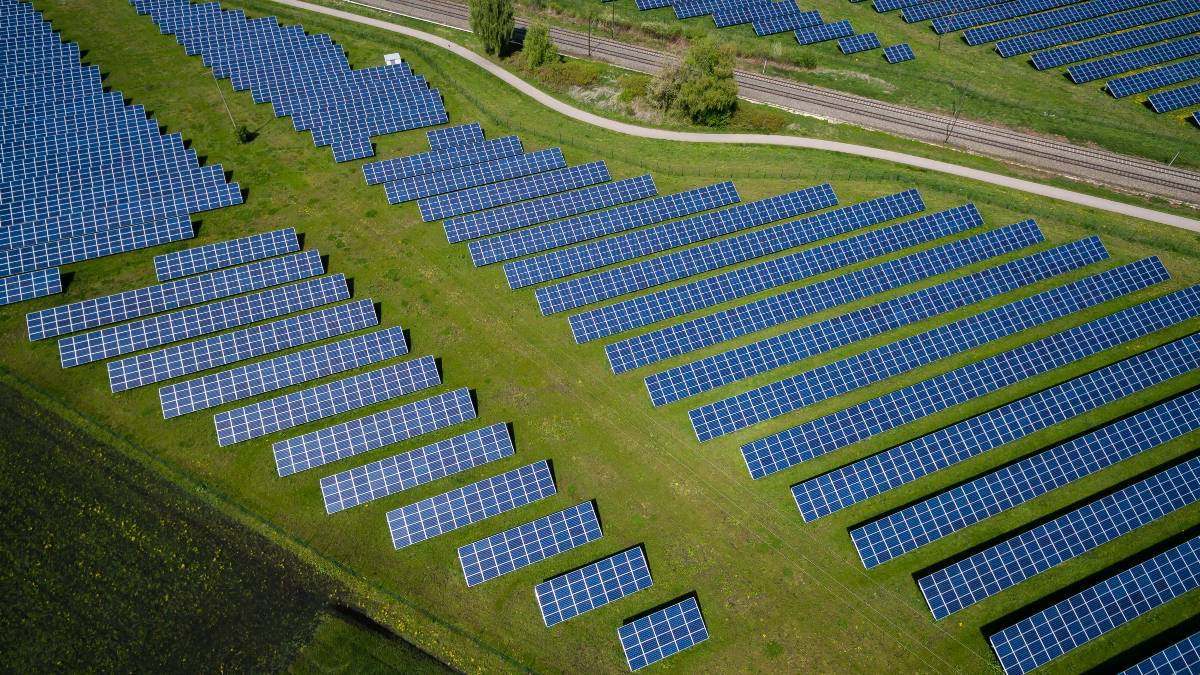
Snabba väderomslag har präglat elmarknaden i april, med både prisfall och pristoppar som följd. Samtidigt får solkraften allt större påverkan och pressar ner elpriserna, särskilt i södra Sverige.
Månadsmedelpriset för april på den nordiska elbörsen Nord Pool utan påslag och exklusive moms blev 58,66 öre/kWh i elområde 3, södra Mellansverige, och 22,75 öre/kWh i elområde 1, norra Sverige. På kontinenten syns den så kallade ankkurvan tydligt.
– Nu är solen helt klart på gång. I Tyskland har solen under april producerat nästan 2 TWh mer än ifjol vilket även gynnar oss i Sverige. Ankkurvefenomenet innebär att elpriset är lågt mitt på dagen och stiger raskt mot kvällen. Under perioder med soligt och varmare vårväder är solen ett välkommet inslag här hemma och det påverkar elpriserna nedåt. Den ökar produktionen och minskar konsumtionen, säger Jonas Stenbeck, privatkundschef på Vattenfall Försäljning.
De årliga, planerade underhållsarbetena på kärnkraftverken pågår, vilket innebär att den tillgängliga kapaciteten just nu är cirka 60 procent. Vinden var varierande under april, med snabba skiften mellan stilla och blåsiga perioder, vilket märktes på elpriset.
Den hydrologiska balansen i Norden, alltså det sammanlagda vatteninnehållet i snö, mark och magasin, är svag med betydande underskott i södra Norge. Men magasinsnivåerna i Sverige ligger kring normala nivåer för årstiden och har börjat fyllas på.
– Dock förväntas årets vårflod att, givet dagens förutsättningar, bli lägre än normalt då snötäcket är avsevärt mindre än vanliga nivåer. Vädret kommer avgöra hur väl vårfloden fyller magasinen inför sommaren, säger Jonas Stenbeck.
De höga gaspriserna har fallit något, samtidigt som stigande temperaturer på kontinenten och den stora andelen solkraft haft en stabiliserande effekt. Det geopolitiska läget är dock fortsatt ett orosmoment.
– Det vi sett är att marknaden är väldigt nyhetsdriven. Beroende av vad som rapporteras så reagerar marknaden direkt. Det gör att vi befinner oss i en väldigt speciell situation eftersom denna osäkerhet skapar svängiga och oförutsägbara bränslepriser, vilket i slutändan påverkar elpriset. Jag förstår att många känner en oro men i och med att det blir varmare så kommer man inte att behöva lika mycket el, vilket ger en lägre elkostnad, säger Jonas Stenbeck.
| Medelspotpris | April 2025 | April 2026 |
| Elområde 1, Norra Sverige | 14,39 öre/kWh | 26,09 öre/kWh |
| Elområde 2, Norra Mellansverige | 14,21 öre/kWh | 26,85 öre/kWh |
| Elområde 3, Södra Mellansverige | 37,61 öre/kWh | 56,08 öre/kWh |
| Elområde 4, Södra Sverige | 58,35 öre/kWh | 66,55 öre/kWh |
*Ankkurva: Ankkurvan beskriver hur elproduktionen från förnybara energikällor, som solenergi, påverkar elnätet och elanvändningen över en dag. Kurvan har fått sitt namn eftersom grafen under en dag liknar profilen av en anka.
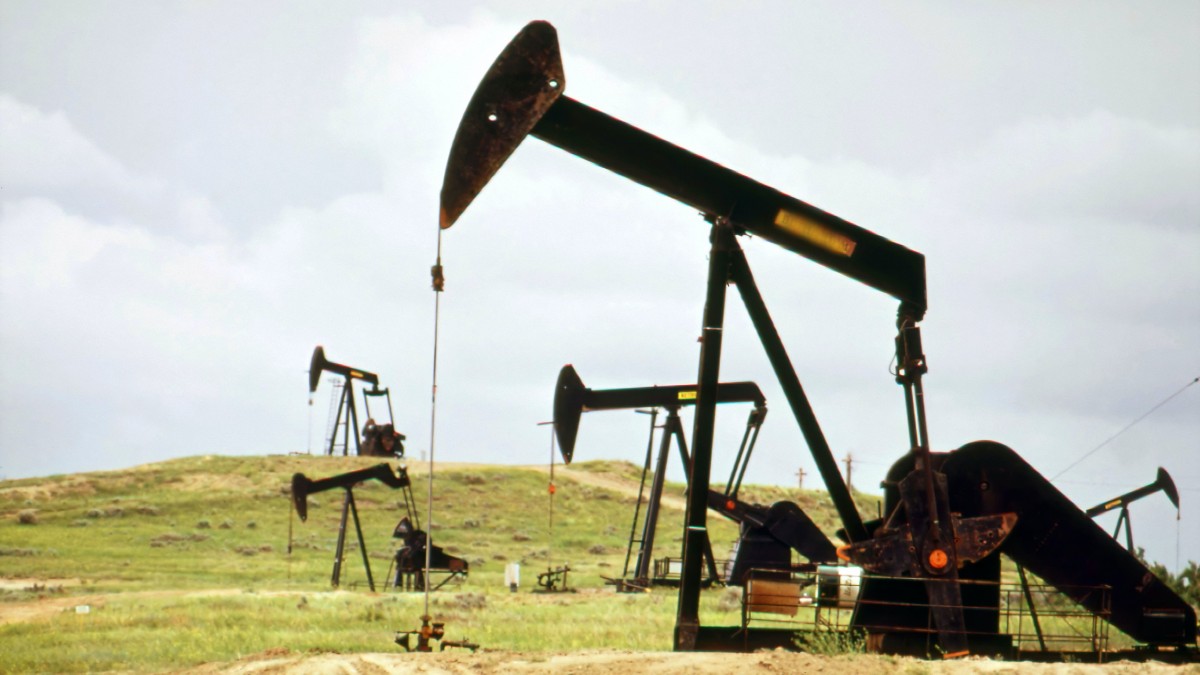
Råvaran olja handlas fortsatt över 100 USD per fat och det är något stökigt med prissättningen. Michel Gubel ger sin syn på läget för oljan, att priskurvan kan vara i contango och backwardation, samt vad som kan hända med olja på längre sikt.


Sommarväder skapar prisrally på elbörsen
Oil product price pain is set to rise as the Strait of Hormuz stays closed into summer

Solkraften pressar elpriserna dagtid

Michel Gubel ger sin syn på oljemarknaden