Nyheter
Branding natural resources a primary asset

I WISH I WERE A CENTRAL BANK
▬ printing money & buying gold and mining shares ▬
BRANDING NATURAL RESOURCES A PRIMARY ASSET

Henk J. Krasenberg
Since long, I have pleaded the case for mining and exploration shares in my reports, convinced as I am that they are a welcome addition to every investment portfolio. This belief and conviction are based on my long term vision that dates back originally from 1983 when I decided to specialize in gold and resource shares and later, again from 2002 when I recognized the new upward cycle of the metals and mining industries. It made me come back to the industry after the long period that metal prices went through many years of depression. I restarted writing on gold, other metals and mining and exploration companies again as I had done for many years before and modesty permits me to say that my timing could not have been better.
However, despite the impressive rise of the gold price, taking along the prices of the other metals, and maintaining the very comfortable level of $1650-1700, the overall prices of mining shares have not been keeping pace with the gold price. To many, an annoying, disappointing and frustrating observation and experience. In my recent issues, I have stated several times that the shares of mining and exploration companies deserve a higher appreciation from the international investment audience. For those investors that shy away from the risks involved in exploration, the shares of the producers are one of the safest ways to add a good gold content to investment portfolios.
Although to a lesser extent, that counts also for companies that are producing silver. It may not be a real precious metal anymore but it certainly is a special enough metal to keep following. I have always liked silver as a cheaper alternative for gold. Some people call it therefore ”a poor man’s gold” but as I consider silver to be a very mature kind of commodity with its own specific qualities, uses and values, I rather speak of it as ”a rich man’s silver”. So let’s talk about the producers of gold and silver in one breath.
With the price levels that we have enjoyed over the last few years, the big producers nearly all have experienced a solid growth in their production numbers. And not only that. By expanding their original mines, bringing others on stream and acquisitions of smaller producers, they have enjoyed increasing cash flows and profits which enabled them to further grow and become stronger. Not surprisingly, their driving force was primarily fuelled by their vision that the rising prices would sustain, a view that was quite in contrast with the view of banks, both central, commercial and private. It still is! The ’regular’ investment world still does not consider gold and other metals and the related resource companies as a viable enough investment for their portfolios. The chart of the gold price as it developed since 2001 shows that they have been missing some boats…….
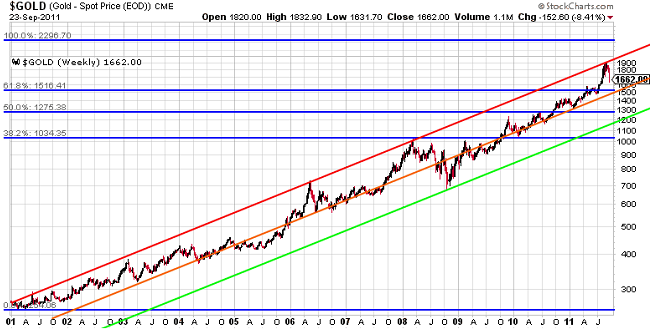
Yet, it is not so difficult to understand this reluctant attitude. Gold has never been seen as a serious investment by banks, brokers, investment advisors, financial planners and tax consultants. Even in the last 10 years when the strong metals markets have drawn a lot of attention from the media, they hardly ever have stimulated their clients, the institutional and private investors, to put money in resource oriented vehicles. When you ask those non-believers what their reasons are for not advocating these choices, you usually don’t hear much more than ”they don’t bring any yield”, ”it is too risky” and ”those companies are too small”. I just fail to understand these excuses.
And, when given the opportunity, I kindly counter by saying that I remember many periods from the past, when new kinds of industries like computer technology, bio technology, healthcare and high tech were so warmly embraced by international investment communities. Was there any yield then, weren’t there huge risks and were those companies so big? Not really, and sure enough, in the end they have brought investors billions of losses.
Honesty requires me to add that there is one more factor that didn’t and still doesn’t help to distribute enthusiasm for resource investments: where most gold and silver producers have really done well business-wise, the performance of their shares in the markets has been very disappointing in general. This definitely provides another and viable excuse to the non-believers for not being in the resource markets. Yet, I see many reasons why many of those non-resource investors should build an interest to add resources stocks to their holdings. Especially in these times, where political, monetary, economical, industrial uncertainties prevail and will continue to do so. I see a great underlying value that seems to be hardly recognized outside and even within the industry.
Back to talking about the producers……… I am not really advocating the shares of the big producers. Major companies like the top-10 producers, Barrick Gold, Newmont Mining, AngloGold Ashanti, Gold Fields, Newcrest, Kinross, Goldcorp, Yamana Gold, Agnico-Eagle Mines, Polyus Gold, have become very complex and are excellently suited for large institutional portfolios. Safe, stable and sound. But at their levels of operations, it has become harder to achieve very spectacular results, unless the gold and silver prices will indeed dramatically increase as several commentators predict for the next few years.
There is more juice in the section of emerging producers. I will give you some names that you probably are not so familiar with, companies that have succeeded in achieving substantial production levels and are looking forward to considerable growth over the next few years: Alacer Gold, Alamos Gold, AuRico Gold, Aurizon Mines, DRD Gold, Eldorado Gold, Endeavour Silver, First Majestic Silver, Focus Minerals, Great Panther Silver, IAMGOLD, Nevsun Resources, Nordgold, Pan American Silver, Randgold Resources, Resolute Mining, SEMAFO, Silver Standard, Silver Wheaton, Silvercorp, SilverCrest Mines, Timmins Gold are all companies that are likely to add a very promising gold and silver component to every investment portfolio.
One category behind those and developing nicely to become part of the previous category, are companies that have commenced production and are on their way to become established and sizeable producers in the next few years: Allied Nevada Gold, Argonaut Gold, Aurcana, Aureus Mining, Brigus Gold, Centamin, CGA Mining, Elgin Mining, Gold Resource Corp, Golden Minerals, Mandalay Resources, McEwen Mining, New Gold, Perseus Mining, Richmont Mines, U.S. Silver & Gold.
All these producers have one big and nice thing in common: they enjoy comfortable cash flows and sizeable profit margins. Even if gold will retreat to the $1400 level that is mentioned frequently by the more pessimistic market watchers. Which I don’t think will happen. I have to add here that most of these ’downers’ are not disagreeing with the outlooks that are painted by the real confident believers in gold and silver.
Over the last few weeks we have been able to read several projections of the gold price, talking about levels that are considerably higher than the level we see today.
Noteworthy was renowned market guru Jim Sinclair’s Tweet of August 22 in which he said ”prices of $3500-$4000 and $4500 are now in the market’s focus”. My down-toearth observation was that Jim’s figure was only ”more than a 100%-plus rise” to which I added in my Tweet that ”I opt for half of that….”.
For me, it is a clear case. Gold is due to go higher, considerably higher and I don’t really care a lot whether it will be to $3,000, $4,000, $5000 or higher. I would be in favour of a not too dramatic rise because I would like the politicians, the bankers and the industrialists to be able to find the controls to all the kinds of crises that we have nowadays. If gold would see reasons to go to the $5,000-$10,000 range, I am not so sure I would like the circumstances that we would face in our daily lives then.
On the way up, we have crossed many roads but I am sure we have passed this sign:
It should not surprise you that against the background of the above scenario, I reiterate and will continue to plead the case for resource stocks, not only the shares of the companies that are in the category of gold and silver producers but certainly also of the companies that are developing towards the development and production stage now.
There are quite many companies that have not taken a production decision yet but they are definitely proceeding to that vital point of maturity. In next month’s issue, I will include a review of interesting companies that are within a reasonable time of reaching an actual start of production or taking their long-awaited production decision. The current group of Supporting Companies already includes some serious candidates!
Next week, I will be off to Denver Colorado where I will visit the Precious Metals Summit ”where the smart money goes prospecting” and ”featuring explorers and developers with high-growth potential” and the Denver Gold Forum that has become a most significant platform for the global precious metals industry to present themselves to qualified investors from around the world. I will attend many company presentations and have series of meetings with the companies’ management. I am pretty sure that they will enable me to make some more interesting and promising discoveries. It will be a pleasure to tell you more about them in my future issues. Sometimes I do wish that I were a Central Bank, the idea of being able to print enough money to buy as much gold, silver, platinum, palladium and mining and exploration shares as I want, is very appealing……!
Henk J. Krasenberg
[hr]
European Gold Centre
European Gold Centre analyzes and comments on gold, other metals & minerals and international mining and exploration companies in perspective to the rapidly changing world of economics, finance and investments. Through its publications, The Centre informs international investors, both institutional and private, primarily in Europe but also worldwide, who have an interest in natural resources and investing in resource companies.
The Centre also provides assistance to international mining and exploration companies in building and expanding their European investor following and shareholdership.
Henk J. Krasenberg
After my professional career in security analysis, investment advisory, porfolio management and investment banking, I made the decision to concentrate on and specialize in the world of metals, minerals and mining finance. From 1983 to 1992, I have been writing and consulting about gold, other metals and minerals and resource companies.
The depressed metal markets of the early 1990’s led me to a temporary shift. I pursued one of my other hobbies and started an art gallery in contemporary abstracts, awaiting a new cycle in metals and mining. That started to come in the early 2000’s and I returned to metals and mining in 2002 with the European Gold Centre.
With my GOLDVIEW reports, I have built an extensive institutional investor following in Europe and more of a private investor following in the rest of the world. In 2007, I introduced my MINING IN AFRICA publication, to be followed by MINING IN EUROPE in 2010 and MINING IN MEXICO in 2012.
For more information: www.europeangoldcentre.com


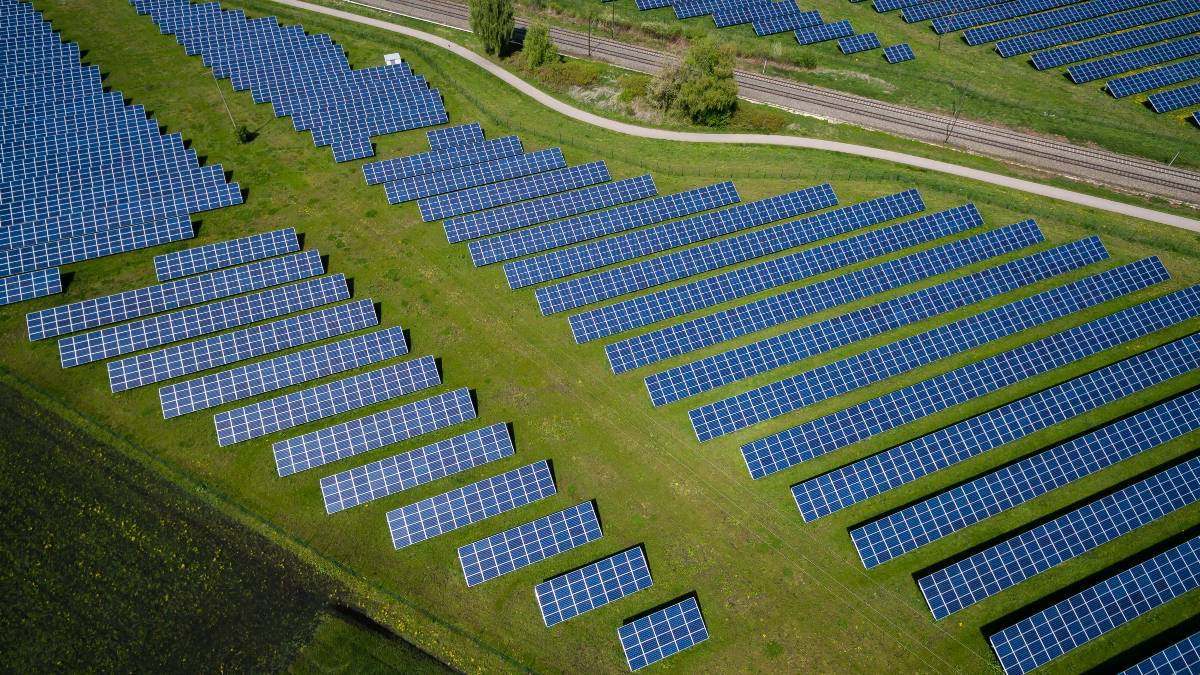
Snabba väderomslag har präglat elmarknaden i april, med både prisfall och pristoppar som följd. Samtidigt får solkraften allt större påverkan och pressar ner elpriserna, särskilt i södra Sverige.
Månadsmedelpriset för april på den nordiska elbörsen Nord Pool utan påslag och exklusive moms blev 58,66 öre/kWh i elområde 3, södra Mellansverige, och 22,75 öre/kWh i elområde 1, norra Sverige. På kontinenten syns den så kallade ankkurvan tydligt.
– Nu är solen helt klart på gång. I Tyskland har solen under april producerat nästan 2 TWh mer än ifjol vilket även gynnar oss i Sverige. Ankkurvefenomenet innebär att elpriset är lågt mitt på dagen och stiger raskt mot kvällen. Under perioder med soligt och varmare vårväder är solen ett välkommet inslag här hemma och det påverkar elpriserna nedåt. Den ökar produktionen och minskar konsumtionen, säger Jonas Stenbeck, privatkundschef på Vattenfall Försäljning.
De årliga, planerade underhållsarbetena på kärnkraftverken pågår, vilket innebär att den tillgängliga kapaciteten just nu är cirka 60 procent. Vinden var varierande under april, med snabba skiften mellan stilla och blåsiga perioder, vilket märktes på elpriset.
Den hydrologiska balansen i Norden, alltså det sammanlagda vatteninnehållet i snö, mark och magasin, är svag med betydande underskott i södra Norge. Men magasinsnivåerna i Sverige ligger kring normala nivåer för årstiden och har börjat fyllas på.
– Dock förväntas årets vårflod att, givet dagens förutsättningar, bli lägre än normalt då snötäcket är avsevärt mindre än vanliga nivåer. Vädret kommer avgöra hur väl vårfloden fyller magasinen inför sommaren, säger Jonas Stenbeck.
De höga gaspriserna har fallit något, samtidigt som stigande temperaturer på kontinenten och den stora andelen solkraft haft en stabiliserande effekt. Det geopolitiska läget är dock fortsatt ett orosmoment.
– Det vi sett är att marknaden är väldigt nyhetsdriven. Beroende av vad som rapporteras så reagerar marknaden direkt. Det gör att vi befinner oss i en väldigt speciell situation eftersom denna osäkerhet skapar svängiga och oförutsägbara bränslepriser, vilket i slutändan påverkar elpriset. Jag förstår att många känner en oro men i och med att det blir varmare så kommer man inte att behöva lika mycket el, vilket ger en lägre elkostnad, säger Jonas Stenbeck.
| Medelspotpris | April 2025 | April 2026 |
| Elområde 1, Norra Sverige | 14,39 öre/kWh | 26,09 öre/kWh |
| Elområde 2, Norra Mellansverige | 14,21 öre/kWh | 26,85 öre/kWh |
| Elområde 3, Södra Mellansverige | 37,61 öre/kWh | 56,08 öre/kWh |
| Elområde 4, Södra Sverige | 58,35 öre/kWh | 66,55 öre/kWh |
*Ankkurva: Ankkurvan beskriver hur elproduktionen från förnybara energikällor, som solenergi, påverkar elnätet och elanvändningen över en dag. Kurvan har fått sitt namn eftersom grafen under en dag liknar profilen av en anka.
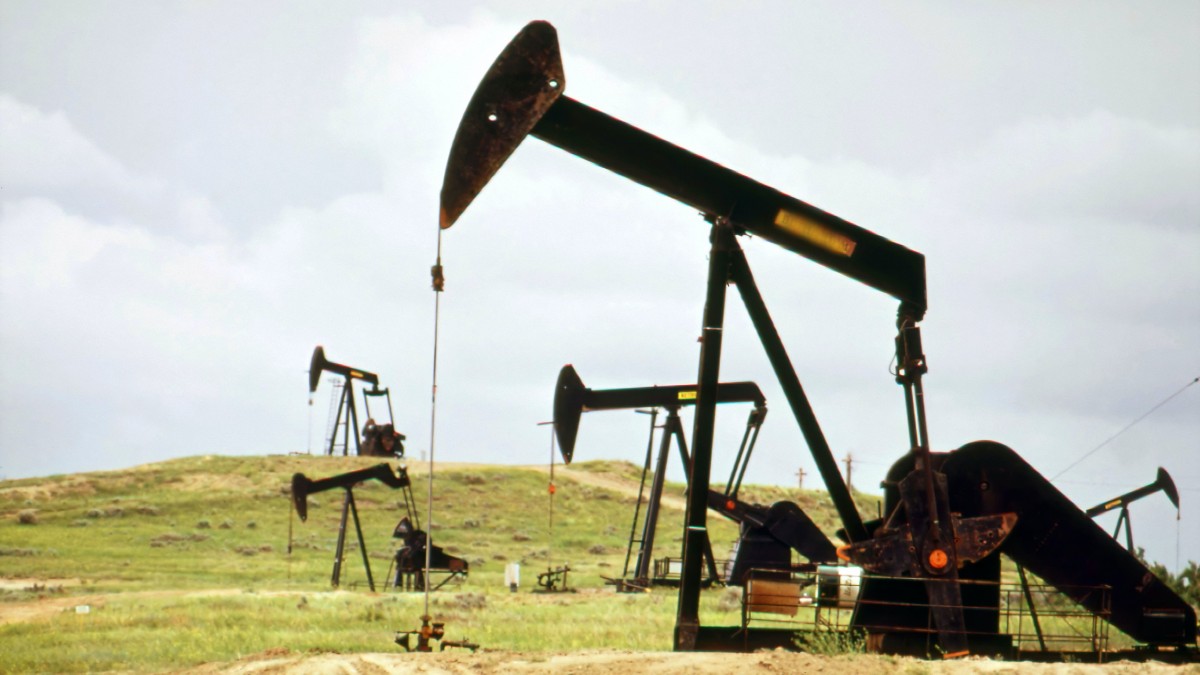
Råvaran olja handlas fortsatt över 100 USD per fat och det är något stökigt med prissättningen. Michel Gubel ger sin syn på läget för oljan, att priskurvan kan vara i contango och backwardation, samt vad som kan hända med olja på längre sikt.

Den norrländska vårfloden väntas dra igång den här veckan och pågå fram till slutet av maj. Att den är ovanligt svag i år bidrar till att elpriset i system fram till midsommar blir ungefär dubbelt så högt som under samma period i fjol. Det visar Bixias elprognos för maj och juni.
Efter en relativt dyr april väntas systempriset landa på 55 öre per kilowattimme i maj och 50 öre i juni, att jämföra med 31 respektive 21 öre förra året.
– Vi har inte haft så lite snö någon vinter sedan 2019 och det syns tydligt i vårfloden. Den prispress vi normalt sett räknar med den här tiden på året blir betydligt svagare än vanligt. Dessutom ligger bränslepriserna på en högre nivå än i fjol på grund av oron i Mellanöstern, vilket spiller över på de svenska elpriserna, säger Johan Sigvardsson, elprisanalytiker på Bixia.
Den hydrologiska balansen ligger på minus 20 terawattimmar, jämfört med ett överskott på 5–10 terawattimmar vid samma tidpunkt i fjol. Tillrinningen väntas kulminera på ungefär 7 terawattimmar per vecka i slutet av maj, långt under ett normalår.
Hur elpriserna utvecklas under resten av 2026 beror i hög grad på hur blöt sommaren blir. Terminspriset för fjärde kvartalet ligger på runt 70 öre per kilowattimme, vilket speglar marknadens oro inför hösten.
– Det krävs fyra till fem blöta veckor för att ta igen underskottet och fylla på vattenmagasinen. Det finns indikationer på att sommaren kan bli torr i mellersta och södra Skandinavien, men osäkerheten är stor. Om det blir så lär priserna stiga ytterligare, säger Johan Sigvardsson.
Elpris april–juni 2026 jämfört med utfall 2025 (öre/kWh)
| Område | Apr 2026 | Apr 2025 | Maj 2026 | Maj 2025 | Juni 2026 | Juni 2025 |
| System | 70 | 35 | 55 | 31 | 50 | 21 |
| SE1 | 27 | 14 | 27 | 14 | 23 | 3 |
| SE2 | 28 | 14 | 29 | 15 | 24 | 5 |
| SE3 | 50 | 38 | 57 | 43 | 47 | 23 |
| SE4 | 62 | 58 | 66 | 60 | 59 | 41 |



Oil product price pain is set to rise as the Strait of Hormuz stays closed into summer

Solkraften pressar elpriserna dagtid

Michel Gubel ger sin syn på oljemarknaden
Svag vårflod dubblar elpriserna