

Nyheter
David Hargreaves on The Gold Price and the Numbers Game

 As we noted last week, the platinum market has become a parochial affair, centred on major producer South Africa with its surplus capacity, inter-union rivalries and escalating costs. Silver has become a lapdog which as ever, leaves gold as the pack leader. It has taken to registering daily swings of up to $50/oz which, against medium line of $1600, is a touch over 3%. Nice if you can get your timing right and we are tempted to think much of this trade is computer driven. It gives the perennial bulls a headache. At every bounce they warn us this is the start of the big push. Every fall is more consolidation.
Where lies reality? Facts:
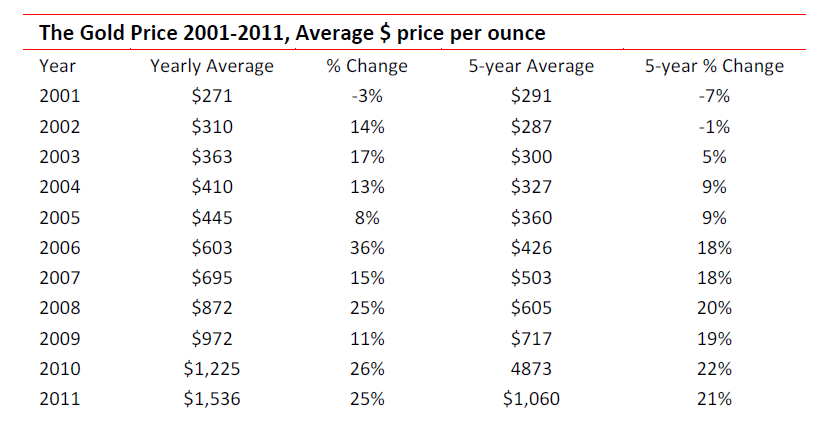
- The average annual gold price has not fallen since 2001.
- Its average increase, year-on-year, has been 16% but is on an accelerating trend.
- The 5-year average has increased similarly, at 14%, also with a rigid acceleration since 2006.
- If the 5-year average continues to escalate at the recent rate of 20%, this would yield an average by 3016 of $2745/oz.
- Yet if we took the annual average increase of 16% since 2001, by 2016 gold should be $3087/oz.
That of course is how computers think. You cannot really programme them to factor in Libya, Syria, Iran or the Chinese economy. If they continue to be geared to short term trading, the rises will be much less spectacular, as we are presently seeing.
What of Central Bank Buying? We are tempted to say ‘what of it?’ Its only purpose can surely be if gold is to be remonetised. As we have demonstrated often, that would require a gold price north of $20,000/oz, simply to satisfy ongoing trade, as expressed by GDP. More likely would be a 15-20% gold backing for an exchangeable currency. On a straight GDP basis we find:
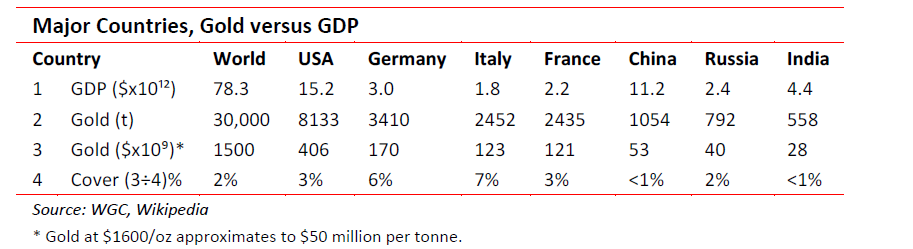
The ratio of gold holdings to GDP is only one measure. Perhaps, in terms of currency value, external indebtedness is an equally relevant marker.

None of this translates into a drive for a gold standard, not even a partial one. We are left to ponder whether the impetus behind continued gold price rises will be left to private citizens, or governments. If it is to be the latter, a much higher metal price would have to be achieved since the supply is not there.
China’s Gold Demand: Don’t believe most of what you see, let alone what you hear. A bit late, but reported is China in April purchasing 100 tons of gold from Hong Kong. This complements 135 tons bought in Q1. The rumour mill asks if it could be Central Bank buying. So if it is? China has a long way to go before its 1054 tons officially held approaches that of the larger holders and signals a move towards its being meaningful. But any additions to PBOC holdings would create an upward knee jerk on the gold price. Newcrest, the world’s No 6 gold miner at 74 tons, is expanding operations at its Bonkro Gold Mine in the Ivory Coast looking to triple output from 4 to 12 tonnes by 2017. The little West African state needs all the help it can get. Gold it its lifeline and it hopes the current 7tpy will become 13 tons by 2013.
Standard Bank a Wee Bit Bearish on Gold. The close-to-the-action bank senses physical demand is weakening and could do more so above $1700 compared with a recent $1600-ish. It looks for it to be better beyond Q3 2012.
Silver in Decline? An in-depth article in the CPM Group Silver Yearbook, 2012 (May) thinks the price of silver will decline over the next couple of years but still remain above $20/oz. This needs to be put in an historic perspective. The silver price had a respectable relationship to gold over the years of 25:35 to 1.0. but stretched out to almost 60:10 when gold propelled itself towards $2000/oz. Then it reasserted itself to about 25:1.0 in a bubble or short duration. Now it thinks 50-60:1.0 is ok again. There is no shortage of either surface supplies or new production of the metal which is used almost 90% industrially and has a high scrap recovery percentage. Geographically, production is spread across 10 major countries of which the largest is Mexico with 17.5% world total. By company control, nobody has over 7%. Its periodic price spikes are mostly contrived.
Americans buy on dips. Sales of US gold eagle bullion coins rose 158%, May over April 2012 and silver eagles 89% in the same period. The metal prices softened too. But year-on-year sales of the gold coins were down 46.7% on May 2011. The dollar has firmed.
[hr]
About David Hargreaves
David Hargreaves
David Hargreaves is a mining engineer with over forty years of senior experience in the industry. After qualifying in coal mining he worked in the iron ore mines of Quebec and Northwest Ontario before diversifying into other bulk minerals including bauxite. He was Head of Research for stockbrokers James Capel in London from 1974 to 1977 and voted Mining Analyst of the year on three successive occasions.
Since forming his own metals broking and research company in 1977, he has successfully promoted and been a director of several public companies. He currently writes “The Week in Mining”, an incisive review of world mining events, for stockbrokers WH Ireland. David’s research pays particular attention to steel via the iron ore and coal supply industries. He is a Chartered Mining Engineer, Fellow of the Geological Society and the Institute of Mining, Minerals and Materials, and a Member of the Royal Institution. His textbook, “The World Index of Resources and Population” accurately predicted the exponential rise in demand for steel industry products.



Christian Kopfer, analytiker på Arctic Securities, kommenterar läget på oljemarknaden till följd av kriget i Gulfen. Ännu så länge prisar marknaden in att situationen ändå löser sig, för fortsätter det 2-3 månader så går priset till 150-200 USD per fat.
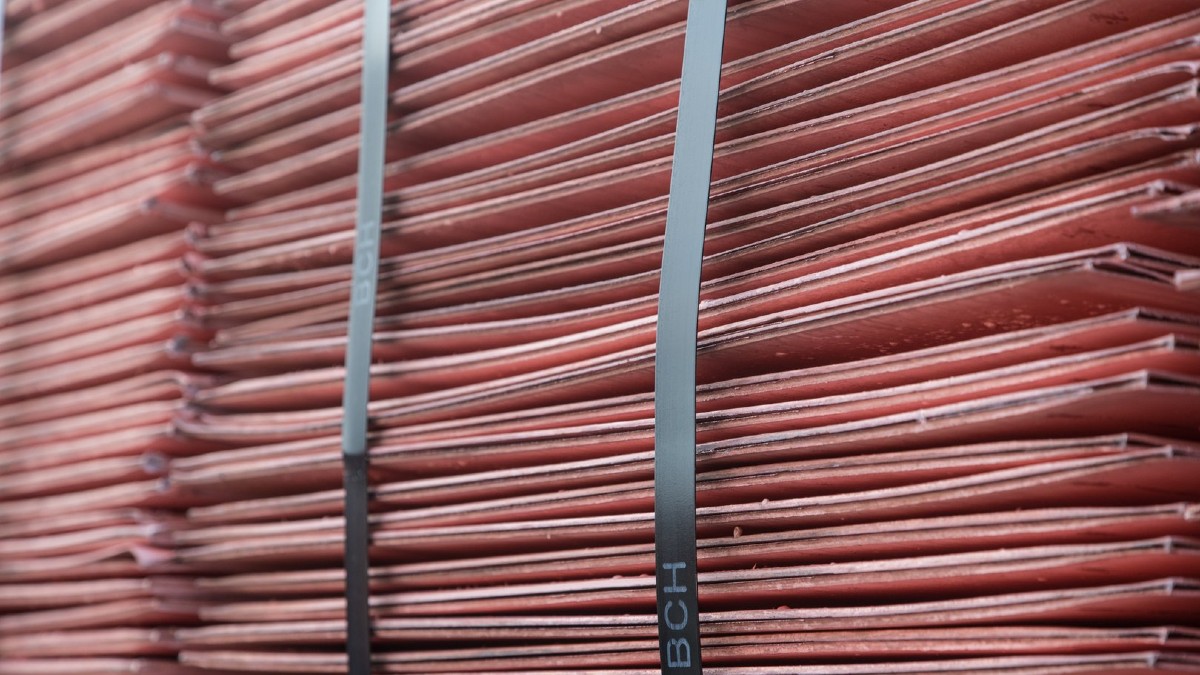
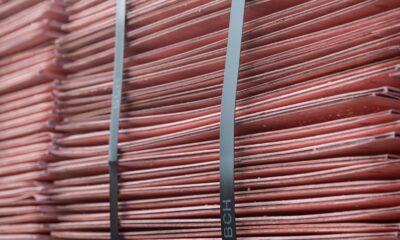
Johannes Grunselius, analytiker på SB1, lyfter fram koppar som den mest attraktiva råvaran i gruvsektorn just nu, och menar att det finns både starka strukturella och långsiktiga drivkrafter bakom efterfrågan. Historiskt har den globala efterfrågan på koppar vuxit med cirka 2–3 procent per år under de senaste 50 åren, men enligt honom står marknaden inför en ny fas där tillväxten kan accelerera till 3–4 procent årligen.
Denna uppväxling drivs framför allt av elektrifieringen av samhället. Koppar är en central komponent i allt från elnät och elfordon till den snabba utbyggnaden av datacenter kopplade till AI-investeringar. Det innebär att efterfrågan inte bara växer, utan gör det på ett mer strukturellt och långsiktigt sätt än tidigare.
Samtidigt pekar Grunselius på ett avgörande problem på utbudssidan. det finns inte tillräckligt med nya kopparprojekt för att möta den ökande efterfrågan. Den globala projektportföljen är otillräcklig, och det är enligt honom i praktiken “omöjligt” för industrin att öka produktionen i den takt som krävs. Slutsatsen blir att marknaden med stor sannolikhet går mot ett underskott, en global kopparbrist, inom några år.
Mot den bakgrunden blir stora nya fyndigheter extremt viktiga. Han lyfter särskilt fram Vicuna-projektet, där omkring 50 miljoner ton koppar har identifierats, motsvarande cirka två års global konsumtion. Det är den största kopparupptäckten på över 30 år och beskrivs som betydelsefull inte bara för enskilda bolag utan för hela industrin. Dessutom finns betydande inslag av guld och silver, vilket ytterligare stärker projektets ekonomiska värde.
Grunselius betonar också att kopparpriserna, trots viss nedgång från toppnivåer, fortfarande ligger på historiskt höga nivåer. Han menar att marknaden behöver börja betrakta dessa nivåer som ett “nytt normalt”, givet de starka fundamentala drivkrafterna i både efterfrågan och utbud.
Sammanfattningsvis är hans bild tydlig att kopparmarknaden står inför en period av strukturell tillväxt kombinerad med begränsat utbud, vilket skapar goda förutsättningar för fortsatt höga priser och gör koppar till en av de mest intressanta råvarorna för investerare.
I relation till koppar diskuterar Grunselius även utsikterna för Lundin Mining och Boliden.
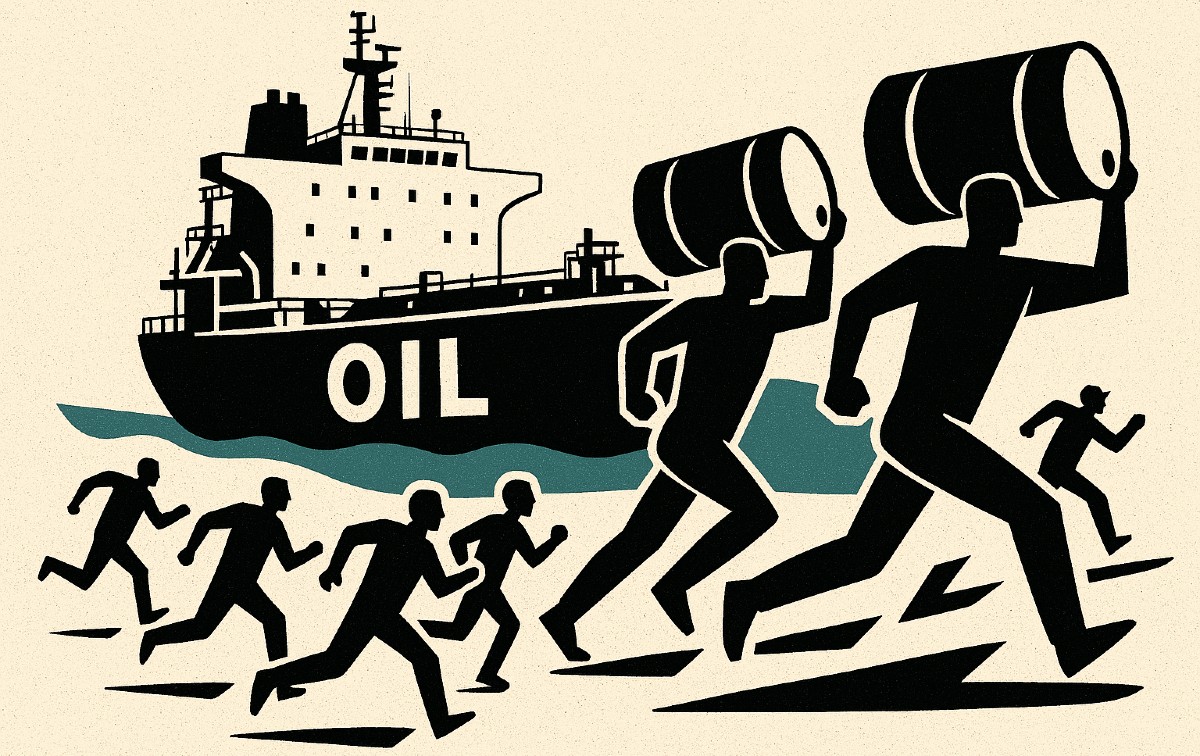
När man följer oljepriset så är det vanligtvis priset på terminen som är närmast förfall man tittar på. Den handlas på börsen, det finns en stor likviditet, har hög transparens och går till lösen inom varje månad. Det är dock bara 1-3 procent av terminerna som går till fysisk leverans, resten avvecklas finansiellt och positionen rullas vidare till nästa termin.
När marknaden börjar skaka kan det därför vara intressant att även titta på ”dated brent”, dvs spotpriset på brentolja med fysisk leverans, där leverans vanligtvis sker inom 10-25 dagar.
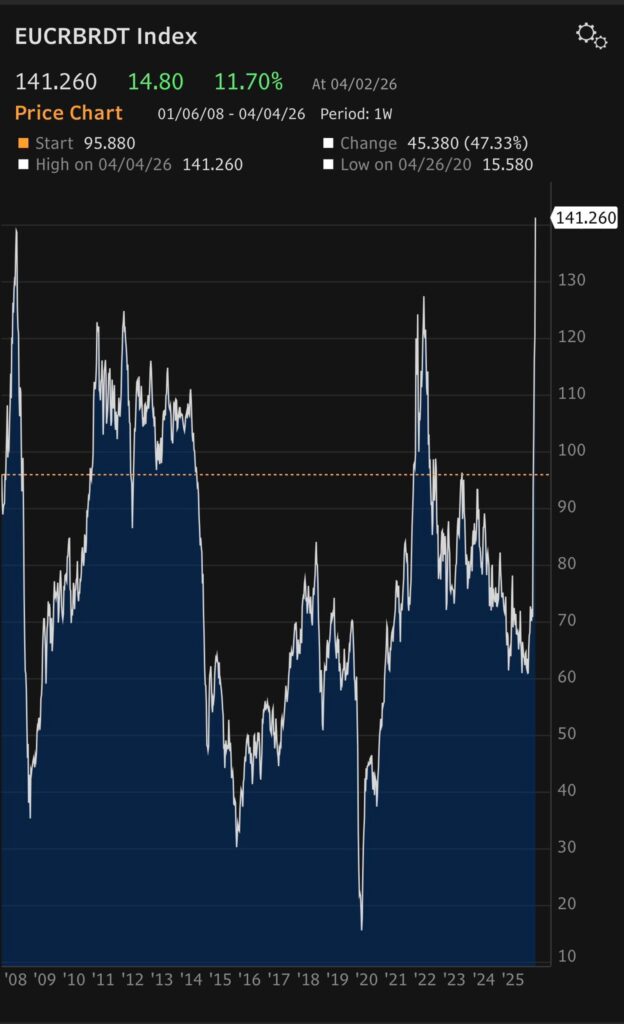
Terminspriset på brentolja är nu 109 USD per fat. Men dated brent-priset är 141 USD! Enligt grafen nedan är det det högsta priset någonsin. Medan andra uppgifter säger att rekordet fortfarande är juli 2008 då det var 147-148 USD. Oavsett vilket, den aktuella prisnivån är enormt hög och viljan att betala ett rejält högre pris än terminspriset tyder på att köpare upplever att det är fysisk brist på olja.


Christian Kopfer om läget för oljan

Marknaden måste börja betrakta de höga kopparpriserna som det nya normala

Det fysiska spotpriset på brentolja har slagit nytt rekord

40 minuter med Javier Blas om hur världen verkligen påverkas av energikrisen

Efter tillväxten: Guldbrev satsar på expansion i Europa
40 minuter med Javier Blas om hur världen verkligen påverkas av energikrisen

Elpriserna fördubblas, stor osäkerhet inför sommaren

MP Materials, USA:s svar på Kinas dominans över sällsynta jordartsmetaller
Det fysiska spotpriset på brentolja har slagit nytt rekord

Studsvik har idag ansökt om att få bygga 1200-1600 MW kärnkraft i Valdemarsvik
-
 Nyheter2 veckor sedan
40 minuter med Javier Blas om hur världen verkligen påverkas av energikrisen
-
 Nyheter3 veckor sedan
Elpriserna fördubblas, stor osäkerhet inför sommaren
-
 Nyheter4 veckor sedan
MP Materials, USA:s svar på Kinas dominans över sällsynta jordartsmetaller
-
 Nyheter2 veckor sedan
Det fysiska spotpriset på brentolja har slagit nytt rekord
-
 Nyheter4 veckor sedan
Studsvik har idag ansökt om att få bygga 1200-1600 MW kärnkraft i Valdemarsvik
-
 Nyheter2 veckor sedan
Marknaden måste börja betrakta de höga kopparpriserna som det nya normala
-

 Nyheter4 veckor sedan
Matproduktion är beroende av gödsel, Gulfkriget skapar brist
-
 Analys4 veckor sedan
TACO (or Whatever It Was) Sends Oil Lower — Iran Keeps Choking Hormuz