

Nyheter
David Hargreaves on oil, week 47 2013


Not the Yellow Metal, the Black One.
Regular readers of the Week in Mining will know that we champion a number of causes, run competitions and offer substantial prizes to the winners. Trillions of dollars actually. The fact that they are Zimbabwean is of no consequence. We have SOTBO (Statement of the Blinding Obvious), which draws regular contenders. Then ROOTS (the Running Out Of Things Society) and also SAC (the Society for the Abolition of Clichés). This latter has outlawed “the yellow metal” (gold), the “red metal” (copper) and now has its teeth into “black gold” or oil, as it is also known. There is no basis of comparison between the two, since oil is industrially useful and gold is not. It simply represents the fear factor.
Presently, a tonne of oil is worth less than an ounce of gold and this could – unthinkably – become less.
This is not because of a pending crash in the gold price but potentially in that of our favourite lubricant. It is much about the arrival of shale oil, particularly in the USA. That country, the single greatest world economic power house and energy user, was largely responsible for the Organisation of Petroleum Exporting Countries, OPEC, establishing a position of dominance in supply, ensuing that for 40 years the world price was at least quadruple its cost of production. That could abruptly end. America is about to become the largest producer once more, possibly an exporter. At least it will switch the focus onto growing importers China and India and could significantly alter the US perception of its role as the Middle East policeman. Our next step for oil is for marker Brent Crude, currently at $110 per barrel, to register $80, then welcome to no-man’s land. The trend is undeniable.

The trend is unmistakable: The USA is producing more oil and using less. This was a deliberate policy before shale gas came along. Thus its import dependency fell in the decade by 118Mt and is expected to zero in the next 2 to 3 years. Natural gas presents an even more startling picture. Production in the period has bounced over 26% and is gaining momentum. Consumption rose only 10% but in doing so, local prices have fallen sharply, from a peak of $8.85 per million BTU in 2008 to $2.76 by 2012. This has been at the expense of coal, where, as shown, production has fallen 9.5% and consumption 22.6%, leaving the country a growing net exporter. For the foreseeable future, this puts serious pressure on OPEC and particularly the Middle East. It could alter America’s defence attitude to the region, leading continuing importers China, Japan, India, EU in the hot seat. We might again start to call it black gold if those two commodities start to chase each other down the price spiral.
It has put the International Energy Agency, IEA, on a spot. Only this year, that watchdog described shale oil as a “game changer”. The Middle East producers who account for about 40% of world crude output and 60% of exports, have slowed down on new projects. Further, their sovereign wealth funds, Kuwait, Bahrain, UAE, Jordan, have been heavily investing abroad in non-oil businesses. Now the IEA is having a bit of a revisit. It thinks shale oil is now “Surge rather than a revolution” and East of Suez will reassert itself by the mid 2020’s. The same source now says the USA will overtake Russia as the largest producer in 2015 (it was to have been 2017). Reserves worldwide continue to grow, not least offshore Brazil, whilst stirrings in the automobile industry, as we report in Watchtower, are not to be ignored.
[hr]
About David Hargreaves

David Hargreaves
David Hargreaves is a mining engineer with over forty years of senior experience in the industry. After qualifying in coal mining he worked in the iron ore mines of Quebec and Northwest Ontario before diversifying into other bulk minerals including bauxite. He was Head of Research for stockbrokers James Capel in London from 1974 to 1977 and voted Mining Analyst of the year on three successive occasions.
Since forming his own metals broking and research company in 1977, he has successfully promoted and been a director of several public companies. He currently writes “The Week in Mining”, an incisive review of world mining events, for stockbrokers WH Ireland. David’s research pays particular attention to steel via the iron ore and coal supply industries. He is a Chartered Mining Engineer, Fellow of the Geological Society and the Institute of Mining, Minerals and Materials, and a Member of the Royal Institution. His textbook, “The World Index of Resources and Population” accurately predicted the exponential rise in demand for steel industry products.



Christian Kopfer, analytiker på Arctic Securities, kommenterar läget på oljemarknaden till följd av kriget i Gulfen. Ännu så länge prisar marknaden in att situationen ändå löser sig, för fortsätter det 2-3 månader så går priset till 150-200 USD per fat.
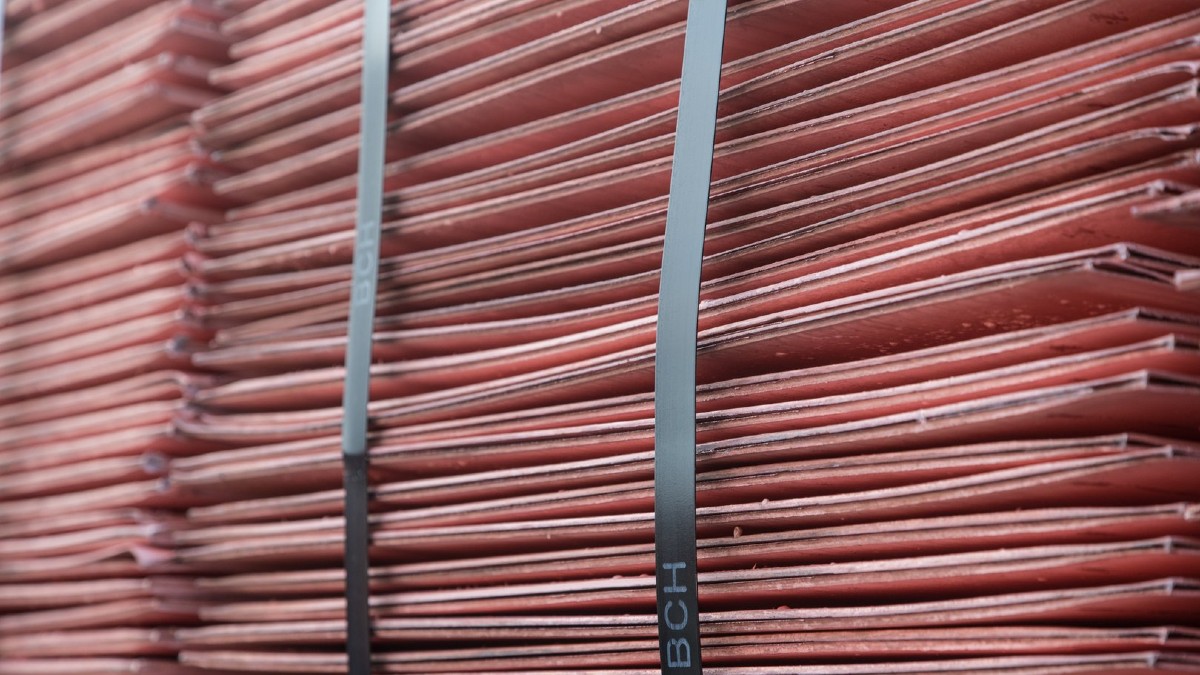
Johannes Grunselius, analytiker på SB1, lyfter fram koppar som den mest attraktiva råvaran i gruvsektorn just nu, och menar att det finns både starka strukturella och långsiktiga drivkrafter bakom efterfrågan. Historiskt har den globala efterfrågan på koppar vuxit med cirka 2–3 procent per år under de senaste 50 åren, men enligt honom står marknaden inför en ny fas där tillväxten kan accelerera till 3–4 procent årligen.
Denna uppväxling drivs framför allt av elektrifieringen av samhället. Koppar är en central komponent i allt från elnät och elfordon till den snabba utbyggnaden av datacenter kopplade till AI-investeringar. Det innebär att efterfrågan inte bara växer, utan gör det på ett mer strukturellt och långsiktigt sätt än tidigare.
Samtidigt pekar Grunselius på ett avgörande problem på utbudssidan. det finns inte tillräckligt med nya kopparprojekt för att möta den ökande efterfrågan. Den globala projektportföljen är otillräcklig, och det är enligt honom i praktiken “omöjligt” för industrin att öka produktionen i den takt som krävs. Slutsatsen blir att marknaden med stor sannolikhet går mot ett underskott, en global kopparbrist, inom några år.
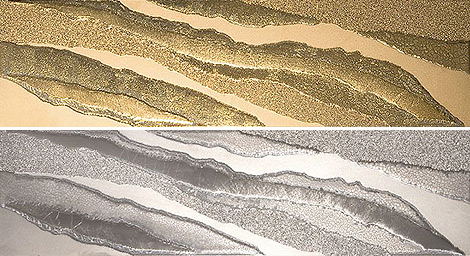
Mot den bakgrunden blir stora nya fyndigheter extremt viktiga. Han lyfter särskilt fram Vicuna-projektet, där omkring 50 miljoner ton koppar har identifierats, motsvarande cirka två års global konsumtion. Det är den största kopparupptäckten på över 30 år och beskrivs som betydelsefull inte bara för enskilda bolag utan för hela industrin. Dessutom finns betydande inslag av guld och silver, vilket ytterligare stärker projektets ekonomiska värde.
Grunselius betonar också att kopparpriserna, trots viss nedgång från toppnivåer, fortfarande ligger på historiskt höga nivåer. Han menar att marknaden behöver börja betrakta dessa nivåer som ett “nytt normalt”, givet de starka fundamentala drivkrafterna i både efterfrågan och utbud.
Sammanfattningsvis är hans bild tydlig att kopparmarknaden står inför en period av strukturell tillväxt kombinerad med begränsat utbud, vilket skapar goda förutsättningar för fortsatt höga priser och gör koppar till en av de mest intressanta råvarorna för investerare.
I relation till koppar diskuterar Grunselius även utsikterna för Lundin Mining och Boliden.

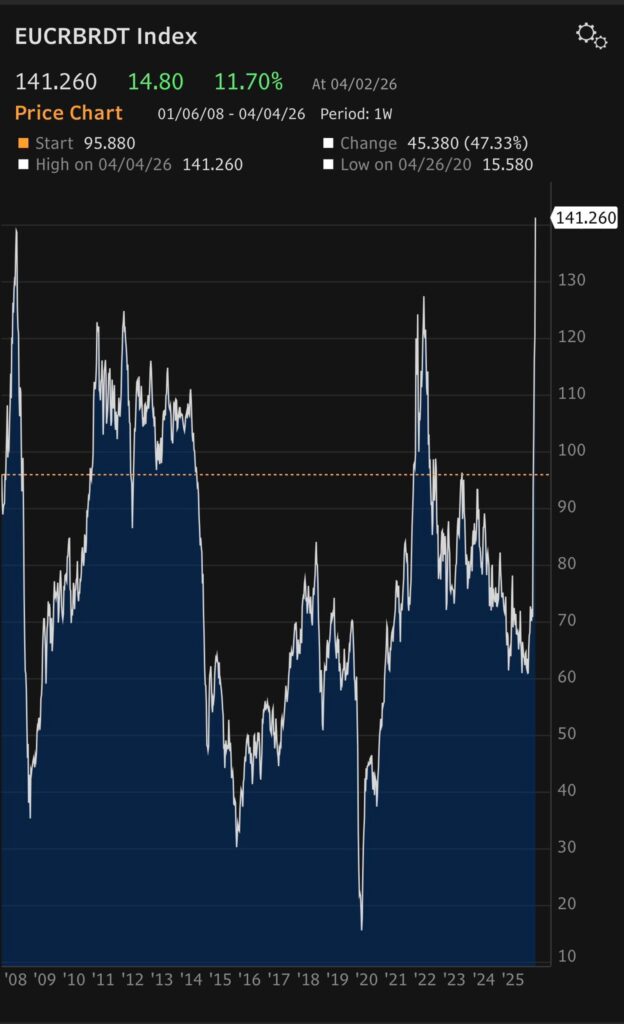
När man följer oljepriset så är det vanligtvis priset på terminen som är närmast förfall man tittar på. Den handlas på börsen, det finns en stor likviditet, har hög transparens och går till lösen inom varje månad. Det är dock bara 1-3 procent av terminerna som går till fysisk leverans, resten avvecklas finansiellt och positionen rullas vidare till nästa termin.
När marknaden börjar skaka kan det därför vara intressant att även titta på ”dated brent”, dvs spotpriset på brentolja med fysisk leverans, där leverans vanligtvis sker inom 10-25 dagar.
Terminspriset på brentolja är nu 109 USD per fat. Men dated brent-priset är 141 USD! Enligt grafen nedan är det det högsta priset någonsin. Medan andra uppgifter säger att rekordet fortfarande är juli 2008 då det var 147-148 USD. Oavsett vilket, den aktuella prisnivån är enormt hög och viljan att betala ett rejält högre pris än terminspriset tyder på att köpare upplever att det är fysisk brist på olja.



Christian Kopfer om läget för oljan

Marknaden måste börja betrakta de höga kopparpriserna som det nya normala

Det fysiska spotpriset på brentolja har slagit nytt rekord

40 minuter med Javier Blas om hur världen verkligen påverkas av energikrisen

Efter tillväxten: Guldbrev satsar på expansion i Europa

Elpriserna fördubblas, stor osäkerhet inför sommaren
40 minuter med Javier Blas om hur världen verkligen påverkas av energikrisen

MP Materials, USA:s svar på Kinas dominans över sällsynta jordartsmetaller
Det fysiska spotpriset på brentolja har slagit nytt rekord

Studsvik har idag ansökt om att få bygga 1200-1600 MW kärnkraft i Valdemarsvik
-
 Nyheter3 veckor sedan
Elpriserna fördubblas, stor osäkerhet inför sommaren
-
 Nyheter2 veckor sedan
40 minuter med Javier Blas om hur världen verkligen påverkas av energikrisen
-
 Nyheter4 veckor sedan
MP Materials, USA:s svar på Kinas dominans över sällsynta jordartsmetaller
-
 Nyheter2 veckor sedan
Det fysiska spotpriset på brentolja har slagit nytt rekord
-
 Nyheter4 veckor sedan
Studsvik har idag ansökt om att få bygga 1200-1600 MW kärnkraft i Valdemarsvik
-
 Nyheter2 veckor sedan
Marknaden måste börja betrakta de höga kopparpriserna som det nya normala
-

 Nyheter4 veckor sedan
Matproduktion är beroende av gödsel, Gulfkriget skapar brist
-
 Analys4 veckor sedan
TACO (or Whatever It Was) Sends Oil Lower — Iran Keeps Choking Hormuz