
Nyheter
The Aluminium Producers make a case

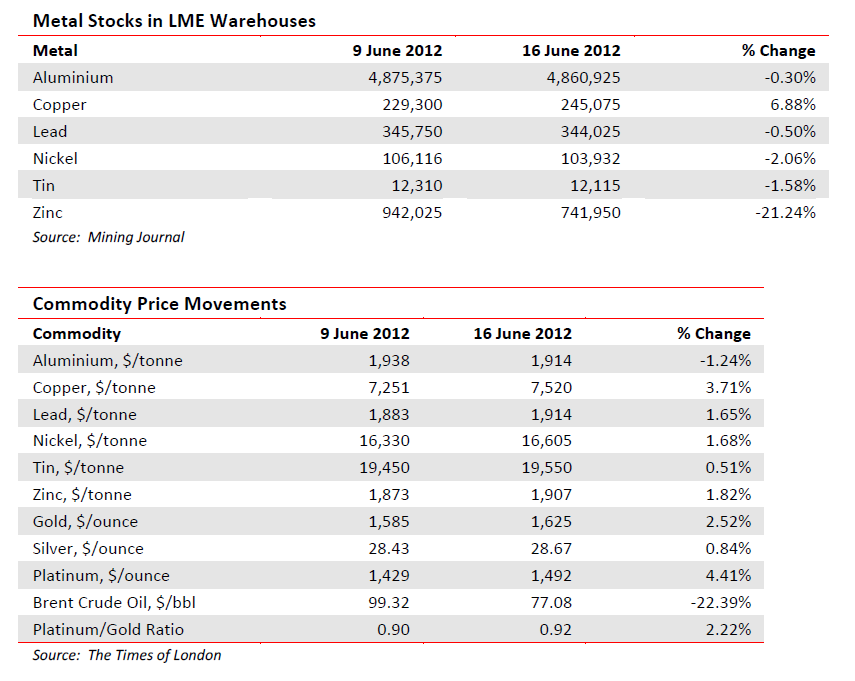
 Whilst warehouse stocks scarcely stirred, prices for choice moved up, not much, but up. The involved producers all talked a good game. Rio Tinto said we shall face a supply deficit in aluminium in 2013. Alcoa says we are going to make car bodies out of that lightweight metal. Barclays Bank says commodity prices are in ‘no mans land’. S&P says there are rough times ahead for nickel and zinc. Who to believe and does it matter? Good thing it is not serious. Aluminium: just to remind, the world’s largest producers are:
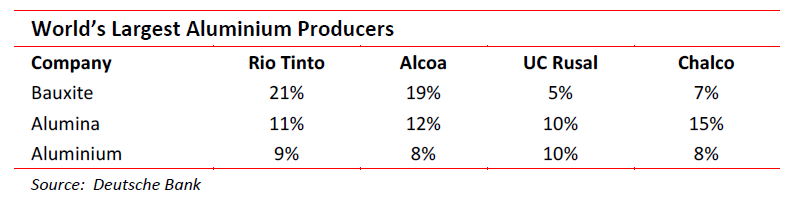
Rio says the high cost capacity cuts this year will give us a supply deficit in 2013. There has been zero growth on the supply side for some years, only low energy cost producers are in with a shout and the high cost ones are baling out.
Alcoa took 500,000t out at the start of this year, Norsk Hydro did 180,000t and Rio is also cutting back. But this is a 40Mtpa market with almost 5Mt in LME warehouses. Now, Alcoa is building a 740,000 tpa smelter in Saudi Arabia and China, 40% of world metal production, is producing regardless.
Aluminium Car Bodies. Not a new idea this. The reason why most units of Britain’s iconic Land Rover, first produced in 1948, are still running is that they had aluminium bodies. Its availability arose from the scrapping of wartime aeroplanes.
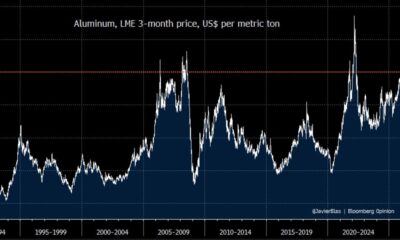
Not only was it cheap, it was, and still is, more malleable and lighter than steel. Rustproof, too. Then it became expensive when fuel was cheap and weight not a consideration. So steel took over. Now fuel is expensive and aluminium is relatively cheap again. Alcoa (No 2 in the metal’s production) says aluminium is making a comeback and its demand in the automobile market will double by 2025. Current demand is c 11.5 Mt out of a total usage of 40Mt or almost 30%. The other end uses will not go away so this could become an extra 12Mtpa. We presently have an oversupplied market, but the lead time to new mined and refined production can be up to 10 years. The current price languishes below $2000/t having seen almost $4000/t in 1990 and $3000/t in the heady 2006-9 period. Neither might this move please the carmakers if their units last 40 years instead fo 20. Gnashing of teeth, too, from the zinc miners whose major outlet is galvanising steel to rustproof it. This is one to watch.
Nickel, too, is in oversupply so mixed reaction to news of what might become a major mine in South Africa’s Bushveld Complex, home to most of the world’s platinum. Announced by AIM-quoted URU Metals (URU.L 5.25; Hi-Lo 11.0p-4.5p), they speak of 25,000 tpy metal at a price (quotes Mining Weekly) of almost $4/lb including CAPEX. That is about $8500/t compared with a current $16,600/t, itself a long way from historic highs. Buoyed by this they speak of an IRR of 25.7% and a 3.8 year payback. URU’s two partners are South Africa Nickel and BEE group UNMEX.
We were treated to mixed views on Zinc this week, the bullish one from Selwyn Resources which has a mega, low grade deposit in Canada’s Yukon Territory. The Selwyn story is based on the rapid rate of closure of some historic, high grade mines, particularly in Canada and the dearth of replacements, which it intends to rectify. As ever, the Chinese position is they key. That country is the largest metal producer (31% compared with No 2 Peru at 12%), consumer (43% vs the USA, next at 7%) and 3rd largest importer at 10% following Germany and USA. It shows little sign of abating but this has not reduced the near record level of warehouse stocks. Mining of zinc outside China has become two-way traffic. Anglo and Exxaro are exiting. The latter has completed the R931M ($110M) sale of its Namibian, Rosh Pinah mine to Glencore. That company is already the most potent force in zinc marketing. Should its merger with Xstrata take place, the combined group would control c.15% of world smelter production. That alone does not signify success; ask Rio with its grip on the aluminium market.
The London Metal Exchange, the oldest and largest of its type, has been bought by Hong Kong Exchanges and Clearing. They paid £1.4bn in a deal concluded Friday June 15th 2012. Now it should be upwards and onwards, with warehouses and open trading in China. Whilst the LME is big in physical metals, through its international network of warehouses, it also transacts about 20% of the futures business. The Chinese have always been a bit dubious of futures, considering them speculative. Wait until they get the hang of it.
[hr]
About David Hargreaves
David Hargreaves
David Hargreaves is a mining engineer with over forty years of senior experience in the industry. After qualifying in coal mining he worked in the iron ore mines of Quebec and Northwest Ontario before diversifying into other bulk minerals including bauxite. He was Head of Research for stockbrokers James Capel in London from 1974 to 1977 and voted Mining Analyst of the year on three successive occasions.
Since forming his own metals broking and research company in 1977, he has successfully promoted and been a director of several public companies. He currently writes “The Week in Mining”, an incisive review of world mining events, for stockbrokers WH Ireland. David’s research pays particular attention to steel via the iron ore and coal supply industries. He is a Chartered Mining Engineer, Fellow of the Geological Society and the Institute of Mining, Minerals and Materials, and a Member of the Royal Institution. His textbook, “The World Index of Resources and Population” accurately predicted the exponential rise in demand for steel industry products.








Det råder speciella förutsättningar på elmarknaden just nu och allt styrs till största delen av vädret. Sol och bitvis god vindkraftsproduktion under maj, i kombination med svag hydrologi och begränsad kärnkraft har lett till stora svängningar i elpriset. Juni inleds liknande och idag tangerar elpriserna nivåer från krisåret 2022. Dock förväntas elpriserna gå ner då kärnkraften ökar.
Juni börjar med höga elpriser och orsakerna är brist på vindkraft, torra väderprognoser och mindre kärnkraft. Prisuppgången i maj var särskilt tydlig i norra Sverige, elområde 1 och 2, och ligger just nu nära en krona per kWh. I elområdena 3 och 4, södra Sverige, blev månadsmedelspotpriset för maj 35–40 procent högre jämfört med april men har rusat idag till nivåer på mellan 130–160 öre/kWh.
– Dagens höga priser visar tydligt på hur snabbt förändrade väderprognoser får genomslag på elpriset. Sommarens väder påverkar även priserna inför hösten och vintern. Ska det bli mer stabila elpriser behövs ett typiskt svenskt sommarväder, dvs. en blandning av regn, vind och sol, snarare än extremvärme och högtryck. Särskilt viktig är nederbörden i Norge och norra Sverige där vattenkraften dominerar, säger Jonas Stenbeck, privatkundschef på Vattenfall Försäljning.
Den hydrologiska balansen, dvs. det sammanlagda vatteninnehållet i snö, mark och magasin, är väldigt ansträngt efter en snöfattig vinter. Det stora underskottet håller i sig och är starkt beroende av mer nederbörd i närtid. På grund av pågående revisioner, bland annat Ringhals 3 och Forsmark 2, är elproduktionen från svensk kärnkraft begränsad just nu. Oskarshamn 3 har planerad återstart den 10 juni och Ringhals 4, som för närvarande producerar med halv effekt, går upp till full effekt den 12 juni. Det innebär att den installerade effekten då kommer att stiga från 40 till 60 procent i Sverige.
Det geopolitiska läget är fortsatt ett orosmoment men ryktet om ett fredsförslag har lugnat marknaden något. Gas- och oljepriserna fortsätter att falla och de stigande temperaturerna på kontinenten och den stora andelen solkraft kan ha en stabiliserande effekt.
| Medelspotpris | Elområde 1, Norra Sverige | Elområde 2, Norra Mellansverige | Elområde 3, Södra Mellansverige | Elområde 4, Södra Sverige |
| Maj 2026 | 46,36 öre/kWh | 48,95 öre/kWh | 70,86 öre/kWh | 87,05 öre/kWh |
| Maj 2025 | 14,09 öre/kWh | 15,09 öre/kWh | 42,94 öre/kWh | 60,01 öre/kWh |
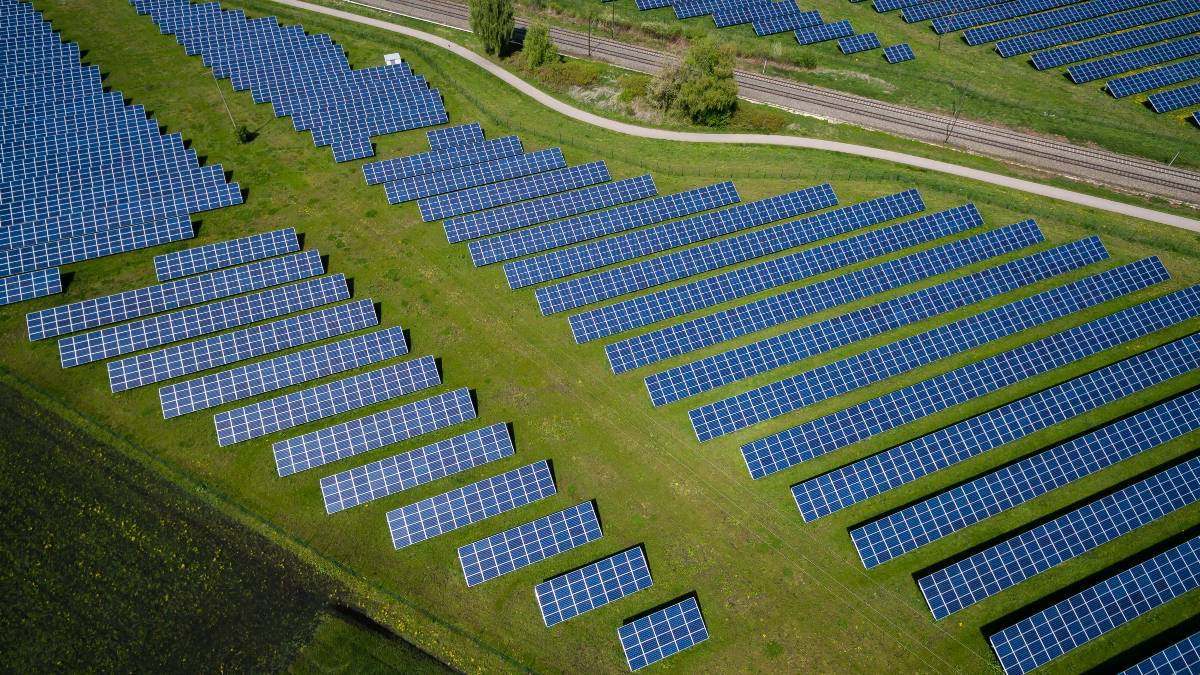
Snabba väderomslag har präglat elmarknaden i april, med både prisfall och pristoppar som följd. Samtidigt får solkraften allt större påverkan och pressar ner elpriserna, särskilt i södra Sverige.
Månadsmedelpriset för april på den nordiska elbörsen Nord Pool utan påslag och exklusive moms blev 58,66 öre/kWh i elområde 3, södra Mellansverige, och 22,75 öre/kWh i elområde 1, norra Sverige. På kontinenten syns den så kallade ankkurvan tydligt.
– Nu är solen helt klart på gång. I Tyskland har solen under april producerat nästan 2 TWh mer än ifjol vilket även gynnar oss i Sverige. Ankkurvefenomenet innebär att elpriset är lågt mitt på dagen och stiger raskt mot kvällen. Under perioder med soligt och varmare vårväder är solen ett välkommet inslag här hemma och det påverkar elpriserna nedåt. Den ökar produktionen och minskar konsumtionen, säger Jonas Stenbeck, privatkundschef på Vattenfall Försäljning.
De årliga, planerade underhållsarbetena på kärnkraftverken pågår, vilket innebär att den tillgängliga kapaciteten just nu är cirka 60 procent. Vinden var varierande under april, med snabba skiften mellan stilla och blåsiga perioder, vilket märktes på elpriset.
Den hydrologiska balansen i Norden, alltså det sammanlagda vatteninnehållet i snö, mark och magasin, är svag med betydande underskott i södra Norge. Men magasinsnivåerna i Sverige ligger kring normala nivåer för årstiden och har börjat fyllas på.
– Dock förväntas årets vårflod att, givet dagens förutsättningar, bli lägre än normalt då snötäcket är avsevärt mindre än vanliga nivåer. Vädret kommer avgöra hur väl vårfloden fyller magasinen inför sommaren, säger Jonas Stenbeck.
De höga gaspriserna har fallit något, samtidigt som stigande temperaturer på kontinenten och den stora andelen solkraft haft en stabiliserande effekt. Det geopolitiska läget är dock fortsatt ett orosmoment.
– Det vi sett är att marknaden är väldigt nyhetsdriven. Beroende av vad som rapporteras så reagerar marknaden direkt. Det gör att vi befinner oss i en väldigt speciell situation eftersom denna osäkerhet skapar svängiga och oförutsägbara bränslepriser, vilket i slutändan påverkar elpriset. Jag förstår att många känner en oro men i och med att det blir varmare så kommer man inte att behöva lika mycket el, vilket ger en lägre elkostnad, säger Jonas Stenbeck.
| Medelspotpris | April 2025 | April 2026 |
| Elområde 1, Norra Sverige | 14,39 öre/kWh | 26,09 öre/kWh |
| Elområde 2, Norra Mellansverige | 14,21 öre/kWh | 26,85 öre/kWh |
| Elområde 3, Södra Mellansverige | 37,61 öre/kWh | 56,08 öre/kWh |
| Elområde 4, Södra Sverige | 58,35 öre/kWh | 66,55 öre/kWh |
*Ankkurva: Ankkurvan beskriver hur elproduktionen från förnybara energikällor, som solenergi, påverkar elnätet och elanvändningen över en dag. Kurvan har fått sitt namn eftersom grafen under en dag liknar profilen av en anka.
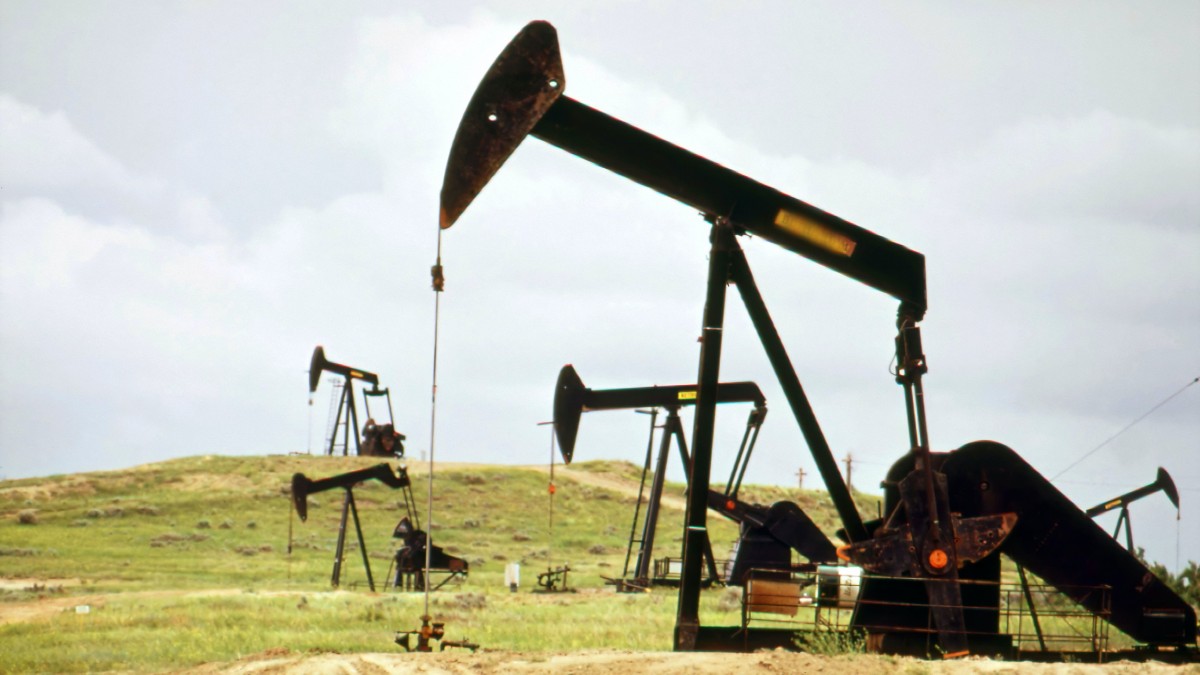
Råvaran olja handlas fortsatt över 100 USD per fat och det är något stökigt med prissättningen. Michel Gubel ger sin syn på läget för oljan, att priskurvan kan vara i contango och backwardation, samt vad som kan hända med olja på längre sikt.


Sommarväder skapar prisrally på elbörsen
Oil product price pain is set to rise as the Strait of Hormuz stays closed into summer

Solkraften pressar elpriserna dagtid

Michel Gubel ger sin syn på oljemarknaden