

Nyheter
David Hargreaves on Iron ore, week 14 2012

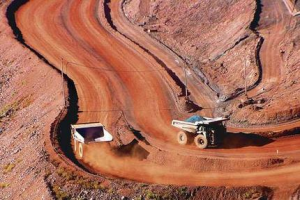 Iron Ore continues to dominate news in the bulk trade, as befits a mineral whose output is measured at over one billion tonnes per year and growing at over 6% annually. That alone is the combined exports of Canada and South Africa.
Of greatest importance is that as an export-driven trade, critical to producers such as Australia, Brazil, India and the CIS. Further, almost 60% of all is destined for China and 20% for Japan and South Korea. The market is effectively polarised.
Contract pricing ruled for many years in annual bargains driven by the above importers and the major producing companies Vale SA (24% world production), Rio Tinto (14%) and BHPB (10%). Now it has all but broken down and been replaced by reference to the spot market. The growth of that mechanism owes much to the development of diversified production bases in West Africa and continued growth in the established mining locations. Much has been made of the possible economic slowdown in China. In context, this means that last year’s 9.3% increase may only be 8% this year. That is still another 80Mtpy. There are warnings of the spot price softening but this has not been borne out. It further nudged up to $145.2/t thisweek even as new investment and output news flows in. Increasingly, users are investing in mines to secure supplies.
- Japanese trader Marubeni is teaming up with South Korea’s steel maker Posco and ship builder STX to buy 30% of the Roy Hill project in Australia, whose plan is to hit 55Mtpy by 2014. That works out at about $220/t of output or 1.50 x the sales price.
- AIM listed but with loftier ambitions, London Mining (285p; Hi-Lo 438p-256p) is now fully funded to boost capacity at its Marampa, Sierra Leone mine to 5Mtpy. It has an offtake agreement with trading company Vitol. It also has an offtake contract with Glencore. Both have prepayment clauses. There is a further target of 9Mtpy.
Iron ore pricing. Wood MacKenzie sees iron ore supply and demand coming into balance over the next few years and the price slowly to decline. Their range is $157/t in 2012, $155/t in 2013 and $140/t in 2014. They warn of projects in the riskier and less developed regions suffering. Demand growth in China is pitched at 5% per year. They look for coking coal, essential to steel making, to average $200-215/t in the next few years.
Chrome Ore. A much misunderstood metal, its major end use is as ferro-chrome for use in steel making, particularly the stainless variety. This is achieved by mixing the ore with iron and coke, a relatively expensive process but with a resultant price enhancement. Resources are not a problem, measuring over 300 years at present rates of usage. However they lie selectively in RSA (70%) Russia and CIS (10%) and Zimbabwe (10%). South Africa has long been the dominant producer, but its share of supply as ferro-chrome (as opposed to chrome ore) has slipped from 50% in 2001 to 42% now, with China’s share up in the same period from 5% to 25%. Much of China’s output arises from raw ore shipped from RSA. This has been noticed in high places. They tell us the industry employs 200,000 people and its exports are worth R42bn to GDP. So there is a call to slap a duty of $100/t on raw chrome exports, to encourage local beneficiation. Problem: it is energy intensive and to show the comic-tragic nature of the situation, even as the call went out for the export tax, at least one ferrochrome producer was cutting back on its electricity usage at the behest of power generator Eskom. You can’t have your pasties and eat them, chaps

[hr]
About David Hargreaves
David Hargreaves
David Hargreaves is a mining engineer with over forty years of senior experience in the industry. After qualifying in coal mining he worked in the iron ore mines of Quebec and Northwest Ontario before diversifying into other bulk minerals including bauxite. He was Head of Research for stockbrokers James Capel in London from 1974 to 1977 and voted Mining Analyst of the year on three successive occasions.
Since forming his own metals broking and research company in 1977, he has successfully promoted and been a director of several public companies. He currently writes “The Week in Mining”, an incisive review of world mining events, for stockbrokers WH Ireland. David’s research pays particular attention to steel via the iron ore and coal supply industries. He is a Chartered Mining Engineer, Fellow of the Geological Society and the Institute of Mining, Minerals and Materials, and a Member of the Royal Institution. His textbook, “The World Index of Resources and Population” accurately predicted the exponential rise in demand for steel industry products.



Det råder speciella förutsättningar på elmarknaden just nu och allt styrs till största delen av vädret. Sol och bitvis god vindkraftsproduktion under maj, i kombination med svag hydrologi och begränsad kärnkraft har lett till stora svängningar i elpriset. Juni inleds liknande och idag tangerar elpriserna nivåer från krisåret 2022. Dock förväntas elpriserna gå ner då kärnkraften ökar.
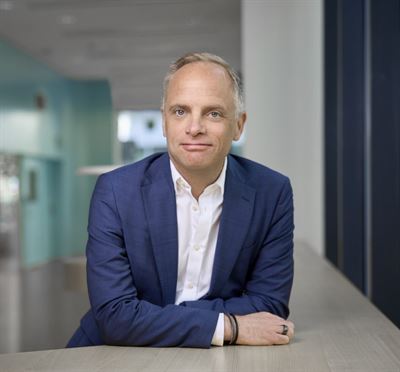
Juni börjar med höga elpriser och orsakerna är brist på vindkraft, torra väderprognoser och mindre kärnkraft. Prisuppgången i maj var särskilt tydlig i norra Sverige, elområde 1 och 2, och ligger just nu nära en krona per kWh. I elområdena 3 och 4, södra Sverige, blev månadsmedelspotpriset för maj 35–40 procent högre jämfört med april men har rusat idag till nivåer på mellan 130–160 öre/kWh.
– Dagens höga priser visar tydligt på hur snabbt förändrade väderprognoser får genomslag på elpriset. Sommarens väder påverkar även priserna inför hösten och vintern. Ska det bli mer stabila elpriser behövs ett typiskt svenskt sommarväder, dvs. en blandning av regn, vind och sol, snarare än extremvärme och högtryck. Särskilt viktig är nederbörden i Norge och norra Sverige där vattenkraften dominerar, säger Jonas Stenbeck, privatkundschef på Vattenfall Försäljning.
Den hydrologiska balansen, dvs. det sammanlagda vatteninnehållet i snö, mark och magasin, är väldigt ansträngt efter en snöfattig vinter. Det stora underskottet håller i sig och är starkt beroende av mer nederbörd i närtid. På grund av pågående revisioner, bland annat Ringhals 3 och Forsmark 2, är elproduktionen från svensk kärnkraft begränsad just nu. Oskarshamn 3 har planerad återstart den 10 juni och Ringhals 4, som för närvarande producerar med halv effekt, går upp till full effekt den 12 juni. Det innebär att den installerade effekten då kommer att stiga från 40 till 60 procent i Sverige.
Det geopolitiska läget är fortsatt ett orosmoment men ryktet om ett fredsförslag har lugnat marknaden något. Gas- och oljepriserna fortsätter att falla och de stigande temperaturerna på kontinenten och den stora andelen solkraft kan ha en stabiliserande effekt.
| Medelspotpris | Elområde 1, Norra Sverige | Elområde 2, Norra Mellansverige | Elområde 3, Södra Mellansverige | Elområde 4, Södra Sverige |
| Maj 2026 | 46,36 öre/kWh | 48,95 öre/kWh | 70,86 öre/kWh | 87,05 öre/kWh |
| Maj 2025 | 14,09 öre/kWh | 15,09 öre/kWh | 42,94 öre/kWh | 60,01 öre/kWh |
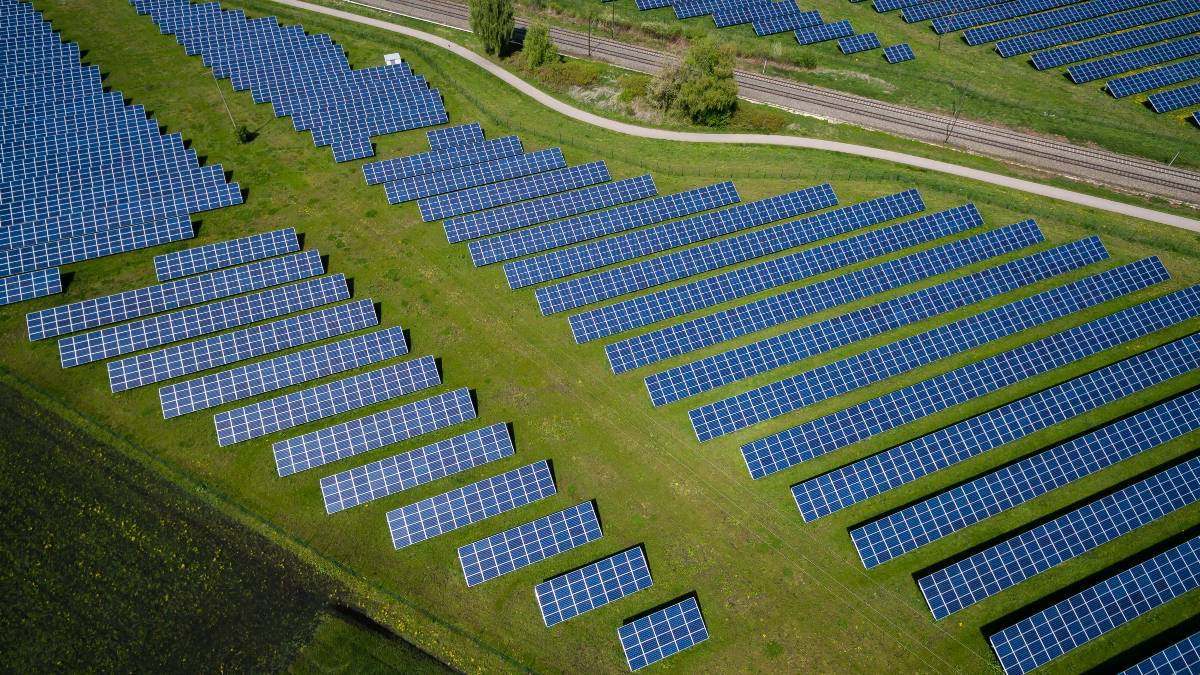
Snabba väderomslag har präglat elmarknaden i april, med både prisfall och pristoppar som följd. Samtidigt får solkraften allt större påverkan och pressar ner elpriserna, särskilt i södra Sverige.
Månadsmedelpriset för april på den nordiska elbörsen Nord Pool utan påslag och exklusive moms blev 58,66 öre/kWh i elområde 3, södra Mellansverige, och 22,75 öre/kWh i elområde 1, norra Sverige. På kontinenten syns den så kallade ankkurvan tydligt.
– Nu är solen helt klart på gång. I Tyskland har solen under april producerat nästan 2 TWh mer än ifjol vilket även gynnar oss i Sverige. Ankkurvefenomenet innebär att elpriset är lågt mitt på dagen och stiger raskt mot kvällen. Under perioder med soligt och varmare vårväder är solen ett välkommet inslag här hemma och det påverkar elpriserna nedåt. Den ökar produktionen och minskar konsumtionen, säger Jonas Stenbeck, privatkundschef på Vattenfall Försäljning.
De årliga, planerade underhållsarbetena på kärnkraftverken pågår, vilket innebär att den tillgängliga kapaciteten just nu är cirka 60 procent. Vinden var varierande under april, med snabba skiften mellan stilla och blåsiga perioder, vilket märktes på elpriset.
Den hydrologiska balansen i Norden, alltså det sammanlagda vatteninnehållet i snö, mark och magasin, är svag med betydande underskott i södra Norge. Men magasinsnivåerna i Sverige ligger kring normala nivåer för årstiden och har börjat fyllas på.
– Dock förväntas årets vårflod att, givet dagens förutsättningar, bli lägre än normalt då snötäcket är avsevärt mindre än vanliga nivåer. Vädret kommer avgöra hur väl vårfloden fyller magasinen inför sommaren, säger Jonas Stenbeck.
De höga gaspriserna har fallit något, samtidigt som stigande temperaturer på kontinenten och den stora andelen solkraft haft en stabiliserande effekt. Det geopolitiska läget är dock fortsatt ett orosmoment.
– Det vi sett är att marknaden är väldigt nyhetsdriven. Beroende av vad som rapporteras så reagerar marknaden direkt. Det gör att vi befinner oss i en väldigt speciell situation eftersom denna osäkerhet skapar svängiga och oförutsägbara bränslepriser, vilket i slutändan påverkar elpriset. Jag förstår att många känner en oro men i och med att det blir varmare så kommer man inte att behöva lika mycket el, vilket ger en lägre elkostnad, säger Jonas Stenbeck.
| Medelspotpris | April 2025 | April 2026 |
| Elområde 1, Norra Sverige | 14,39 öre/kWh | 26,09 öre/kWh |
| Elområde 2, Norra Mellansverige | 14,21 öre/kWh | 26,85 öre/kWh |
| Elområde 3, Södra Mellansverige | 37,61 öre/kWh | 56,08 öre/kWh |
| Elområde 4, Södra Sverige | 58,35 öre/kWh | 66,55 öre/kWh |
*Ankkurva: Ankkurvan beskriver hur elproduktionen från förnybara energikällor, som solenergi, påverkar elnätet och elanvändningen över en dag. Kurvan har fått sitt namn eftersom grafen under en dag liknar profilen av en anka.
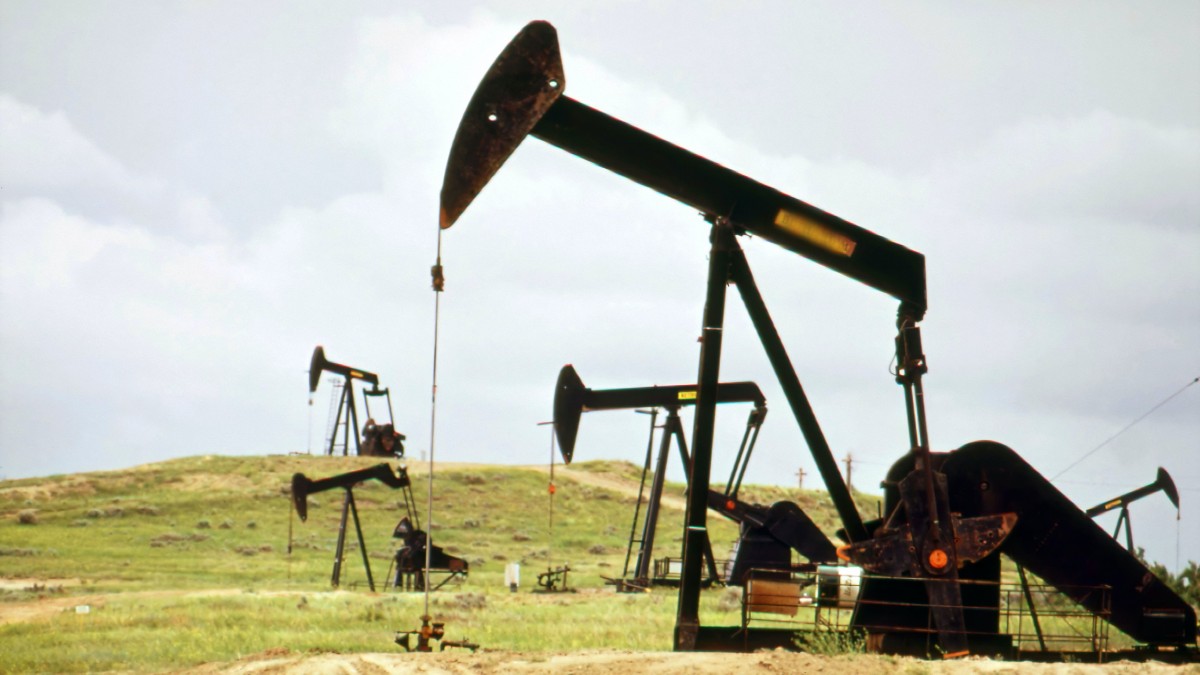
Råvaran olja handlas fortsatt över 100 USD per fat och det är något stökigt med prissättningen. Michel Gubel ger sin syn på läget för oljan, att priskurvan kan vara i contango och backwardation, samt vad som kan hända med olja på längre sikt.



Sommarväder skapar prisrally på elbörsen
Oil product price pain is set to rise as the Strait of Hormuz stays closed into summer

Solkraften pressar elpriserna dagtid

Michel Gubel ger sin syn på oljemarknaden